
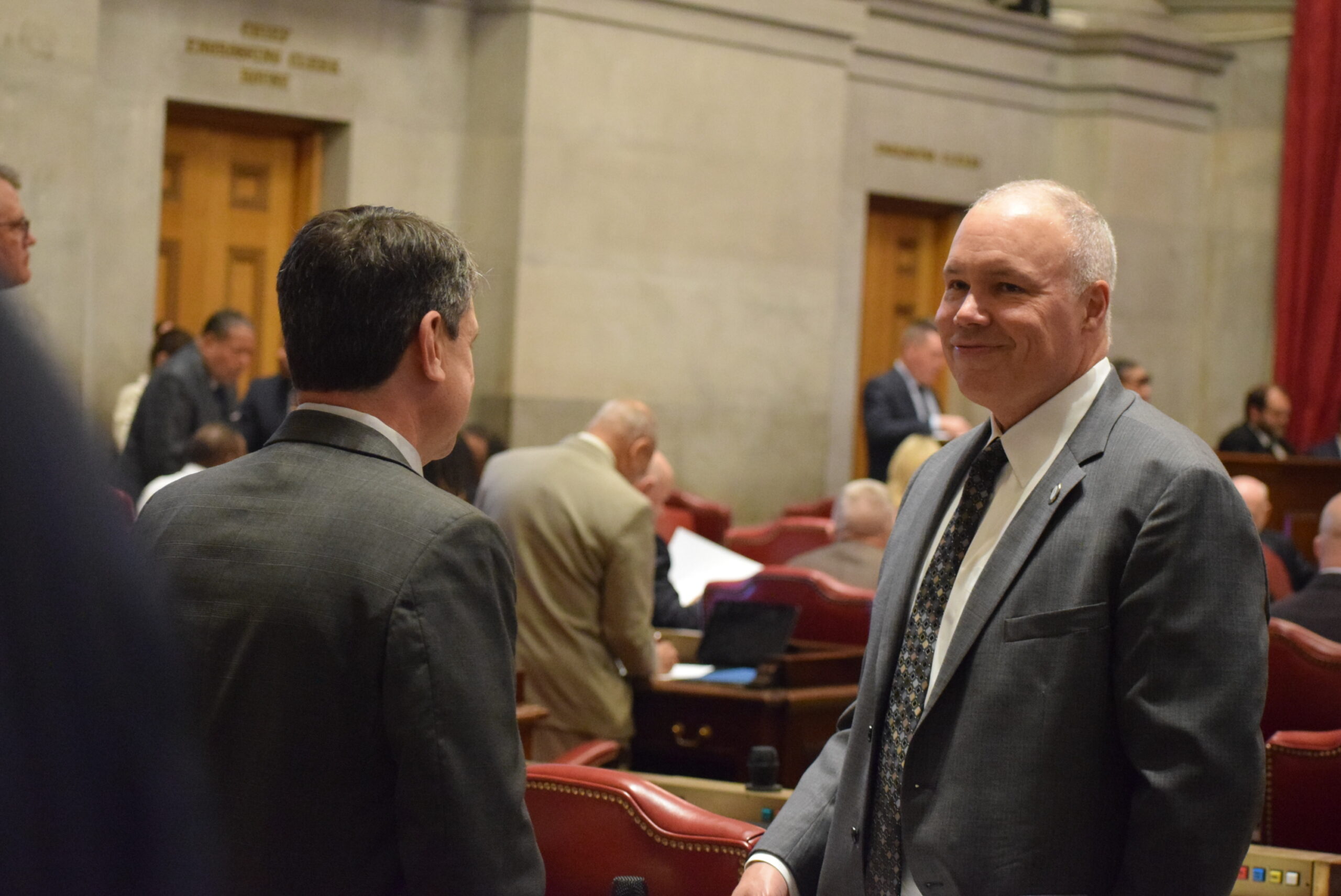
NASHVILLE, Tenn. – State Rep. Bryan Terry, MD, R-Murfreesboro, announced significant health care and workforce accomplishments to strengthen Tennessee’s medical infrastructure and expand innovative treatment pathways during the second session of the 114th General Assembly.
“As chairman of the House Health Committee, this session I was committed to improving access while ensuring safety, strengthening our health care workforce and pursuing innovative solutions to some of Tennessee’s most pressing health challenges,” Terry said.
Historic investment in medical education
One of the most significant achievements was a $350 million appropriation in the 2026-27 state budget for a new multi-purpose medical education facility at the University of Tennessee Health Science Center in Memphis.
“The current medical school facility has served Tennessee for many years but it no longer reflects the level of innovation and excellence needed to remain competitive in recruiting and training the next generation of physicians,” Terry explained. “My goal has been to ensure our state is well-positioned to meet future health care workforce demands and advancing this new facility became a priority.”
The project is designed to address physician shortages and expand training capacity across the Volunteer State. Nationwide, the physician shortages is projected to reach 100,000 by 2034, according to the Cicero Institute.
“This is a historic investment in Tennessee’s medical workforce pipeline that will impact Tennessee’s future for generations,” said University of Tennessee System President Randy Boyd. “We applaud Gov. Bill Lee and the General Assembly for this investment that will grow our medical student enrollment capacity by 30% and double our physician’s assistant program capacity. We appreciate Chairman Terry’s strong partnership and advocacy for the facility from the very beginning.”
Securing ibogaine research access in Tennessee
Terry also championed passage of the Helping Open Pathways to Effective (HOPE) Treatment Act which authorizes research into ibogaine as a potential treatment for opioid use disorder, post-traumatic stress disorder (PTSD) and traumatic brain injury.
The Tennessee Bureau of Investigation (TBI) estimates approximately 70,000 Tennesseans struggle with opioid addiction. Among veterans, it is estimated around 7% of men and 13% of women will experience PTSD in their lifetime, according to the U.S. Department of Veteran Affairs.
“Tennessee needs solutions, not more statistics when it comes to addiction, PTSD and traumatic brain injury, especially among our veterans,” Terry said. “The HOPE Treatment Act positions our state to lead in research on ibogaine and reflects our commitment to finding new ways to support patients and those who have served.”
Just days before the bill passed the legislature, President Donald Trump signed an executive order to accelerate research into ibogaine as a treatment for serious mental illness. The order directs the Secretary of Health and Human Services to allocate $50 million through the Advanced Research Projects for Health (ARPA-H) program to match state investments supporting ibogaine research.
“I recognize the political risk state legislators face in championing alternative medicine, particularly in a state with Tennessee’s conservative tradition,” said Shawn Ryan, U.S. Navy SEAL, former CIA contractor and host of the Shawn Ryan Show. “That courage deserves acknowledgment. Thank you for the open-mindedness to explore innovative, evidence emerging approaches to some of our most persistent and devastating conditions: addiction, PTSD and traumatic brain injury.”
Strengthening the health care workforce
Terry also passed legislation adopting the Respiratory Therapist Interstate Compact making it easier for licensed respiratory therapists to practice across state lines. The measure was supported by the U.S. Department of War and is expected to improve workplace mobility, particularly for military families and underserved areas.
He also passed the Tennessee Nursing Education Integrity and Oversight Act ensuring the Tennessee Board of Nursing and the Tennessee Center for Nursing Advancement can develop education and practice standards that keep pace with the rapidly evolving field of nursing.
Looking ahead
As Tennessee continues to grow, Terry emphasized that building a resilient, innovative and accessible health care system will remain top priority.
“These accomplishments reflect a commitment to both immediate and long-term solutions,” Terry said. “From investing in future health care providers to exploring cutting-edge treatments and removing barriers for critical health care workers, Tennessee is positioning itself as a national leader in health policy.”
The 114th General Assembly adjourned sine die on April 24. The 115th General Assembly will convene on Jan. 12.
Bryan Terry, MD, represents District 48 in the Tennessee House of Representatives which includes the eastern half of Rutherford County.
###