
GOP pushes to end sanctuary courts
Legislation to ensure all Tennessee courts cooperate with federal immigration agencies advanced out of the Civil Justice Subcommittee this week. House Bill 1707, sponsored by State Rep. Rick Scarbrough, R-Oak Ridge, would require Tennessee courts to cooperate with the U.S. Department of Homeland Security and other federal immigration authorities when they are enforcing immigration law.
If a judge obstructs or interferes with federal immigration enforcement actions, the judge can be referred to the Tennessee Board of Judicial Conduct. If misconduct is found, it could lead to disciplinary action or removal from office under the Tennessee Constitution.
“This bill makes it clear Tennessee courts must stand in line with federal immigration enforcement, or judges may face disciplinary action,” Scarbrough told committee members this week.
House Bill 1707 is part of a comprehensive illegal immigration legislative package proposed by Tennessee Republicans to enforce existing laws, protect taxpayers and close sanctuary loopholes. The proposal is expected to be heard in the Judiciary Committee on March 18.
House advances English-only driver requirements
The House this week advanced two bills to improve safety on Tennessee roads by ensuring drivers can read and understand basic English.
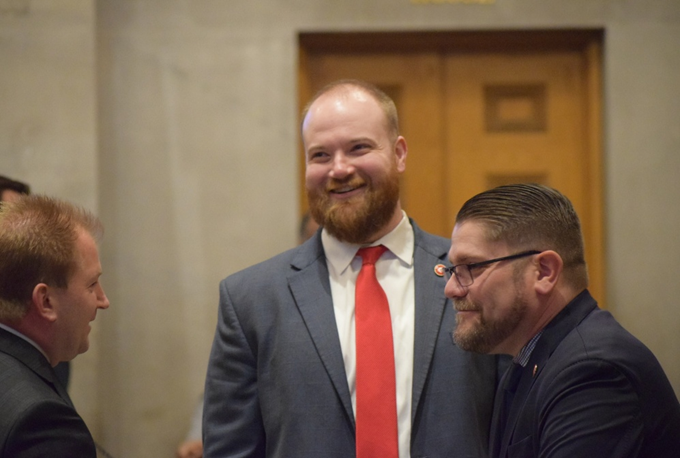
House Bill 1708, sponsored by State Rep. Kip Capley, R-Summertown, would require written driver’s license exams to be administered in English, with a one-time limited exception. The proposal would also require applicants for vehicle registrations or renewals to provide proof of citizenship or lawful status in the United States.
Capley’s proposal would permit a one-time, limited exception allowing an applicant to take the written driver’s license exam in a language other than English. This license would be valid for 18 months and would be granted for travel to and from educational institutions, regular places of employment, places of worship, child care facilities, and medical appointments. Applicants would retake the exam in English after the limited license expires.
House Bill 1817, sponsored by State Rep. Lowell Russell, R-Vonore, requires law enforcement officers to issue an out-of-service order to a commercial driver if they cannot sufficiently read or speak English to communicate with the public, understand traffic signs and signals, or respond to official inquiries. While this law is already in place at the federal level, this legislation would ensure Tennessee maintains the law if the federal government repeals it.
Drivers issued an out-of-service order would also have their commercial driver’s license (CDL) suspended until they pass the written CDL test administered in English by the Tennessee Department of Safety and Homeland Security.
House Bill 1708 is scheduled to be heard in the Finance, Ways and Means Subcommittee on March 18. House Bill 1817 now heads to the full Transportation Committee.
GOP expands school choice to serve more students
A bill advancing in the House and Senate will expand access to the state’s Education Freedom Scholarship program, allowing more families to choose the educational path that best fits their child’s needs.
House Bill 2532,sponsored by House Majority Leader William Lamberth, R-Portland,will allow the Tennessee Department of Education to offer up to 40,000 Education Freedom Scholarshipsbeginning in the 2026-27 school year. The scholarships allow eligible students to use state education funds to attend participating nonpublic schools.
“I trust parents to make the best decisions for their child’s education,” Lamberth told members of the K-12 Subcommittee on Tuesday.
The General Assembly established the scholarship program last year, administering 20,000 scholarships for the 2025-26 academic year. Demand for the program has continued to grow, with applications exceeding 56,000 for the next school year. The Education Freedom Scholarship (EFS) amount is tied to the state’s base per-pupil funding under the Tennessee Investment in Student Achievement (TISA) formula, projected to be about $7,530per student for the 2026-27 school year. House Bill 2532 is expected to be heard for consideration in the Education Committee on March 17.
Greenbelt Initiative Fund Transfer Act supports rural counties
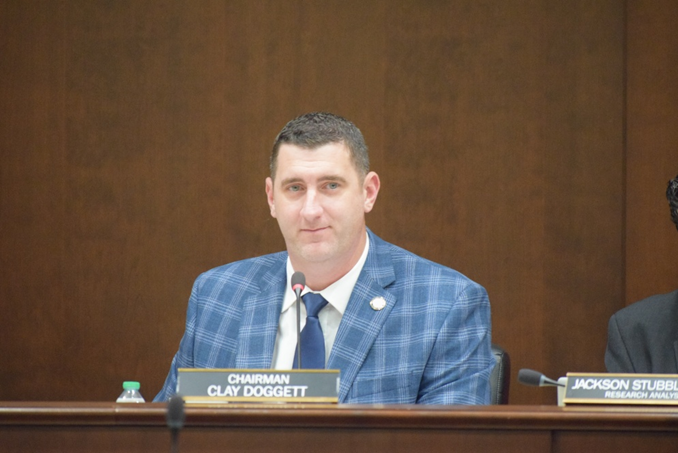
The Greenbelt Initiative Fund Transfer (GIFT) Act, or House Bill 2375, sponsored by State Rep. Clay Doggett, R-Pulaski, would create a $210 million Rural Revenue Equity Fund to support various services and projects in eligible rural communities.
The program seeks to offset property tax revenue losses in counties with high percentages of greenbelt-classified property, which are taxed on use value rather than market value.
“Rural counties often have significantly higher percentages of land classified as greenbelt, which limits local tax revenue needed for essential services,” said Doggett. “The GIFT Act will support these communities by allocating additional funding to benefit vital projects while recognizing the families and farms that make the Volunteer State unique.”
Funding from the Rural Revenue Equity Fund could be used for law enforcement, firefighter and emergency medical services, property tax stabilization, and capital improvement and infrastructure projects. The proposal requires the state treasurer to invest the fund’s assets, with all interest credited to the fund.
Rural counties would be awarded funding based on a total weighted score that considers its percentage of total land under greenbelt; total acres of land in greenbelt; annual agricultural sales or taxable agricultural receipts; whether the county has statutory authority to levy a development tax or impact fee; the number of economic outputs of licensed livestock or dairy farms; population; and if the county adopted a property tax increase during the preceding five years.
Counties with 70% or more of land classified under greenbelt will receive the highest scores. Currently, at least 26 counties across the state meet this criterion, while approximately 51 counties are qualified as rural and would be eligible for the grant. House Bill 2375 is expected to be heard in the Agriculture and Natural Resources Committee on March 17.
Proposal aims to deter, reduce distracted driving
A new proposal would improve safety on Tennessee roads by strengthening penalties for texting while driving.
House Bill 1555, sponsored by State Rep. William Slater, R-Gallatin, will improve consistency in Tennessee law by increasing the maximum allowable local court costs for violations of Tennessee’s hands-free law from $10 to 50% of the standard fees imposed for other moving violations, a range of roughly $37 to $70 in court costs, depending on jurisdiction.
“No text, email or social media notification is worth a life, and I’m hopeful this proposal encourages drivers to put the phone down and keep their focus where it belongs,” said Slater.
It’s illegal under Tennessee law to hold a cell phone, send or read text messages, move out of the seated driving position while reaching for a phone, watch a video, or record while driving. Violations constitute a Class C misdemeanor, with a maximum fine of $50 on the first offense plus $10 in court costs. Revenue from this measure would benefit several funds, including the sex offender treatment fund, victims of crime assistance fund, victims of drunk drivers’ compensation fund, and the civil legal representation of indigents fund, among others.
House Bill 1555 is expected to be heard for consideration in the Finance, Ways and Means Committee on March 17.
Privacy protections for law enforcement advances
In an effort to enhance protections for law enforcement officers engaged in high-risk operations, the State and Local Government Committee advanced House Bill 2506, sponsored by House Speaker Cameron Sexton, R-Crossville, and co-sponsored by State Rep. Dan Howell, R-Cleveland.
The bill requires state and local government entities to keep certain personal information of law enforcement officers confidential in limited or undercover circumstances, including immigration enforcement operations. Current law does not provide a uniform policy across state governments.
The bill addresses growing concerns about the safety of law enforcement officers and the increasing use of social media to target them. In some cases, personal and confidential information about officers has been posted online, putting them and their families at risk. The bill does not limit lawful transparency; instead, it focuses on preventing the misuse of sensitive personal information.
“This legislation is about officer safety, operational integrity, and public trust,” Howell told the committee. “It ensures those enforcing our laws can do their jobs without fear of retaliation, as we’ve seen in some other states.”
A state or local official who releases protected information through criminal negligence could be charged with a Class E felony and face removal from office. The bill also establishes misdemeanor and felony offenses for individuals required to maintain the confidentiality of protected records but who negligently or intentionally disclose them. House Bill 2506 is expected to be heard in the Government Operations Committee on March 16.
Bill seeks to increase oversight of out-of-state nursing programs
A proposal aimed at strengthening oversight of out-of-state nursing education programs advanced in the House this week.
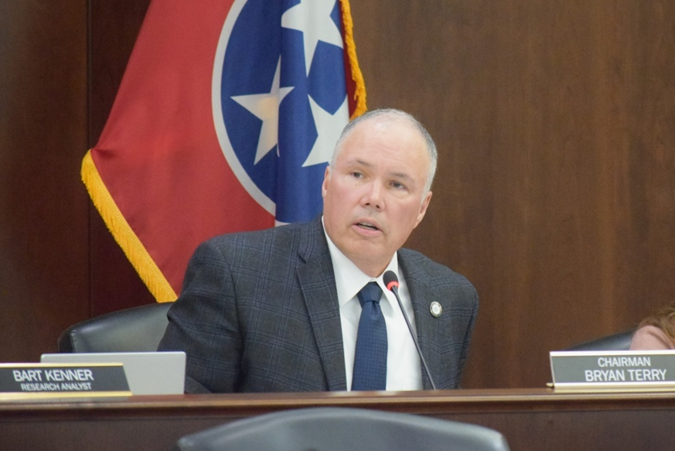
The Tennessee Nursing Education Integrity and Oversight Act, sponsored by Health Committee Chairman Bryan Terry, R-Murfreesboro, would place a two-year pause on approving new out-of-state nursing education programs that want to operate, enroll students, or place students in clinical training in Tennessee.
“The Tennessee Nurses Association [has seen] a growing number of out-of-state nursing programs placing students in Tennessee clinical sites, which appear to not have sufficient oversight, standardized reporting, or clear accountability mechanisms,” Terry told the Health Subcommittee on Wednesday. “The goal is not to limit workforce growth. Its goal is to ensure quality, transparency and patient safety.”
The proposal would give the state time to review oversight standards and improve monitoring of nursing programs, particularly those based outside Tennessee that send students to the state for training.
During the pause, existing out-of-state programs already approved may continue operating but must provide data to state regulators about student placements, outcomes and clinical supervision. Accredited out-of-state nurse anesthesia programs are exempt. The bill also directs the Tennessee Center for Nursing Advancement and the Tennessee Board of Nursing to develop stronger approval standards and reporting requirements for out-of-state programs.
House Bill 1905 is expected to be heard in the Health Committee on March 17.
Stronger protections for pregnancy centers advances
A Republican proposal would protect the ability of Tennessee women to seek life-saving maternal care by strengthening penalties for arson of pregnancy resource centers.
House Bill 2260 by State Rep. Greg Martin, R-Hixson, elevates the offense from a Class C felony to a Class B felony to reflect the serious threat such crimes pose to public safety and community well-being.
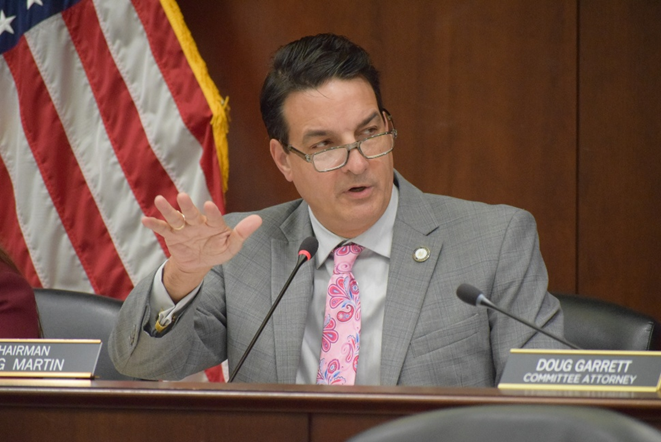
The proposal provides a clear statutory definition of a pregnancy resource center, ensuring these facilities are explicitly protected under state law and eliminating ambiguity in enforcement. The definition includes nonprofit organizations that provide counseling, material support, medical assistance and other resources to women and families facing unexpected or difficult pregnancies.
“These facilities serve as lifelines for women and their families during some of the most vulnerable moments in their lives, and they deserve clear and consistent protection under the law,” Martin said.
Attacks on pregnancy centers increased around the nation following the U.S. Supreme Court’s decision to overturn Roe v. Wade on June 24, 2022. The high court’s ruling in Dobbs v. Jackson Women’s Health Organization triggered laws in 21 states, including Tennessee, either banning or restricting abortions. House Bill 2260 is expected to be heard in the House Judiciary Committee on March 18.
Caring for Caregivers Act advances
Legislation to support families caring for a loved one with Alzheimer’s and related dementia advanced out of the Government Operations Committee this week. The Caring for Caregivers Act, sponsored by State Rep. Renea Jones, R-Unicoi, creates a three-year pilot grant program to help caregivers with lost wages and expenses related to caring for their family member.
“Families across Tennessee are making incredible sacrifices to ensure their loved ones can remain at home and receive compassionate care,” Jones said. “This legislation seeks to ease the financial pressure caregivers often face and help them continue providing care at home.”
Nearly 12 million Americans provide unpaid care for a family member or friend with dementia, a contribution to the nation valued at more than $413 billion, according to a 2025 report by the Alzheimer’s Association.
Participants must be caring for a family member with Alzheimer’s or related dementia who needs help with at least two necessary daily tasks, including walking or bathing, and live in a private residence. Priority is given to lower-income families whose household income falls at or below the median income for their area.
Eligible expenses include home accessibility modifications, medical equipment or assistive technology, respite care and medical supplies like diapers or specialized bedding.
The proposal requests $600,000 for the first year of the program to be split evenly among grantees in the three regions of Tennessee. If passed, the program would be available from July 1, 2026, to Dec. 31, 2029.
House Bill 1443 is expected to be heard in the Finance, Ways and Means Subcommittee on March 18.
Republicans seek fair representation for utilities
Legislation advancing in the House and Senate aims to ensure fair representation for customers of municipally owned electric utilities. House Bill 2418 by House Majority Whip Clark Boyd, R-Lebanon, requires all city-owned electric utilities in Tennessee to give customers living in counties outside municipal boundaries a voting seat in the utility’s governing board for the county they serve.
“Customers who live outside city limits pay the same electric bill rates and endure the same outages as those inside the city, yet have zero say on the board that governs their utility,” Boyd said. “Unfortunately, January’s storm exposed this inequity. This legislation levels the playing field for all Tennesseans who rely on municipal utilities. When every ratepayer has representation, we strengthen accountability, improve service and build a more reliable grid for everyone.”
Boyd introduced the bill following the devastating impacts of Winter Storm Fern in late January, which brought heavy snow, ice and freezing temperatures to Tennessee. Notably, the storm caused one of the most severe power outages in Nashville Electric Service (NES) history, resulting in widespread disruptions across the region and affecting approximately 230,000 customers.The outages left many families without electricity for days, with some areas enduring outages lasting nearly two weeks amid ongoing restoration challenges.
NES serves all of Davidson County, plus portions of six surrounding counties: Wilson, Rutherford, Williamson, Cheatham, Robertson, and Sumner. Currently, NES’s five-member board is appointed exclusively by the mayor of Nashville. House Bill 2418 proposes to require an electric utility company to add at least one new voting board member from each outside county.
The board member would be appointed by the county mayor for a four-year term, with optional initial two-year staggered terms. The new board members may not be city employees and would receive no municipal benefits. House Bill 2418 is expected to be heard in the Cities and Counties Subcommittee on March 18.
Measure expands child safety background checks in schools
A proposal to strengthen background checks for new hires at Tennessee charter and private schools advanced out of the Education Committee this week.

House Bill 2475, sponsored by State Rep. Rebecca Alexander, R-Jonesborough, requires charter schools and private schools to check new hires against the Tennessee Department of Children’s Services’ records for any reports of child abuse or threats to children, just like public schools already do.
It would also allow after-school programs like Head Start and the Boys and Girls Club to check their new hires and volunteers. This legislation follows a situation in Hamilton County where a former public school teacher was hired by a charter school while under investigation for sending inappropriate messages to students. The teacher was recently sentenced to nearly 19 years in federal prison.
“We want to make sure somebody doesn’t leave a public school and go to private school and do the same offenses that they got fired for in the public school,” Alexander told committee members.
If passed, potential employees of any public, charter or private school in Tennessee must go through a criminal background check, including the sex offender registry and DCS records. House Bill 2475 is expected to be heard in the Government Operations Committee on March 16.
General Assembly makes school lunches healthy again
House Republicans on Thursday passed legislation prohibiting the use and sale of petroleum-based artificial dyes in public and charter school meals.
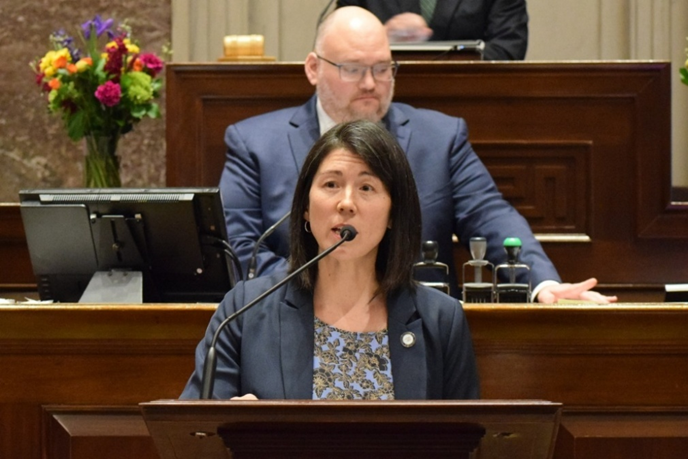
House Bill 1853, sponsored by State Rep. Michele Reneau, R-Signal Mountain, applies to meals served through school nutrition programs and does not ban food and beverage items sold in school vending machines, concessions or fundraisers.
The removal of petroleum-based artificial dyes from school meals seeks to reduce unnecessary chemical exposure for children. The legislation expands upon a law passed last year that banned Red 40 in school nutrition programs at all public and charter schools.
“These dyes add no nutritional value. They are only used for appearance to make food look brighter and more colorful,” said Reneau. “(This bill) ensures that when Tennessee schools feed our children, we are prioritizing foods that support their health and well-being.”
The U.S. Department of Health and Human Services and the Food and Drug Administration have announced a national initiative to phase out petroleum-based synthetic food dyes, including steps to revoke authorization for certain dyes and to work with manufacturers to eliminate synthetic dyes from the food supply by the end of 2026. The Senate companion version passed in February. The bill now heads to Gov. Bill Lee’s desk. The law is expected to take effect Aug. 1, 2027.
Bill would stop the clock on daylight saving time
Tennesseans would no longer have to change their clocks twice a year if a new Republican proposal passes in the General Assembly. House Bill 1300, sponsored by State Rep. Chris Todd, R-Madison County, would eliminate daylight saving time in the Volunteer State and require the observance of standard time year-round.
“Keeping standard time year-round will provide consistency, improve health and productivity, and better align our schedules with natural daylight,” Todd said.
Daylight saving time was originally implemented in 1918, with proponents arguing that rolling clocks back an hour would save energy and allow people to take advantage of daylight hours, according to the Library of Congress. A year later, the U.S. Congress repealed daylight saving time. After being temporarily reinstated between 1942 and 1945, the Uniform Time Act of 1966 established a standardized time system for the nation.
Daylight saving time has several adverse effects on Americans, including increased health risks like heart attacks and strokes, according to a report from the Johns Hopkins Bloomberg School of Public Health. It can also negatively impact sleep patterns by disrupting the circadian rhythm, making it more difficult to fall asleep.
While states cannot choose to observe permanent daylight saving time, they can exempt themselves, as House Bill 1300 seeks to do. In 2019, the Tennessee General Assembly passed a trigger law to observe daylight saving time year-round if the U.S. Congress passed a measure giving states that ability, but no federal action has been taken.
If passed by the General Assembly and signed into law, House Bill 1300 would be implemented beginning March 14, 2027. The legislation will be heard in the State and Local Government Committee on March 18.
Restoring State Sovereignty through Nullification Act advances
A Republican proposal that seeks to preserve the separation of powers and states’ rights advanced out of the Public Service Subcommittee this week.
The Restoring State Sovereignty Through Nullification Act, or House Bill 2610, sponsored by State Rep. Bud Hulsey, R-Kingsport, would create rules, actions and guidelines for the state to nullify an unconstitutional federal action as void and unenforceable in Tennessee.
“When Congress passes a law that lines up with the Constitution, that is the supreme law of the land,” Hulsey told members of the Public Service Subcommittee. “But what do you do when Congress passes a law or an executive order comes out of the executive branch of government that is not constitutional? That’s the problem. How does a state deal with that?”
Hulsey’s proposal allows several entities to bring forth a proposed bill or ruling of nullification against a federal action, including: the Tennessee governor through executive authority; members of the Tennessee General Assembly, if approved by the body; any court operating under the Tennessee Constitution if it has proper venue and jurisdiction; any combination of 10 counties and municipalities governing bodies, if approved by the General Assembly; or a signed petition of 2,000 registered voters, if approved by the General Assembly.
House Bill 2610 defines an unconstitutional federal action as one implemented or adopted without authority specifically delegated to the federal government by the people and the states through the U.S. Constitution.
Public funds and any state or local officer holder, agency or government employee could not be used to assist in the enforcement of any federal action deemed void by the state, according to the bill. Any federal action could be considered, including those already in place. The proposal will be heard in the State and Local Government Committee on March 18.
Briefly…
Child trafficking prevention: The House on Monday passed House Bill 1527, sponsored by State Rep. Jake McCalmon, R-Franklin, to require school districts to provide age- and developmentally-appropriate child trafficking prevention and awareness education as part of health education from kindergarten through 12th grade. House Bill 1527 allows qualified health care professionals or social workers to assist with instruction. The companion version of the proposal is still advancing through the Senate.
Children’s Services investigations:House Bill 1734,sponsored by State Rep. Debra Moody, R-Covington, requires the Tennessee Department of Children’s Services to record testimonies from minorsby video or audio during an investigation involving child abuse, dependency or neglect. The proposed legislation would limit the significant emotional damage and psychological trauma children often endure when required to repeat traumatic events during an investigation. House Bill 1734 will be heard for consideration in the House Judiciary Committee on March 18.
Protecting 2A rights for renters: The General Assembly approved legislation this week ensuring landlords cannot ban Tennesseans from legally possessing firearms or ammunition in their rental homes. House Bill 469, sponsored by State Rep. Lee Reeves, R-Franklin, protects a tenant’s right to legally carry and store a firearm inside a rental unit, in a vehicle parked at the residence and while directly entering or exiting those locations through hallways, parking lots or other common areas. Landlords may require firearms to be concealed, holstered or stored in a carrying container when moving through shared spaces. If a landlord violates these protections, a tenant may pursue civil action. The bill also protects landlords from civil liability solely for complying with the law. The legislation does not apply to health care facilities, mental health facilities, certain senior living centers or schools. The bill now heads to Gov. Bill Lee’s desk for his signature.
Desecration of burial sites: The Tennessee General Assembly this week passed House Bill 1731, sponsored by State Rep. Dave Wright, R-Corryton, expanding what constitutes desecrating a venerated object to include the removal of objects from a place of burial by a person other than a family member, authorized cemetery representative, or other specified entity. People often leave coins and other items on veterans’ graves as a sign of honor and respect. A penny means someone has visited the grave, a nickel means they attended boot camp together, a dime means they served together, and a quarter means the person leaving the coin was with the service member when they died, according to the Wounded Warrior Project. Desecrating a venerated object is a Class E felony in Tennessee. House Bill 1731 now heads to Gov. Bill Lee’s desk for his signature.
AI deepfakes: The General Assembly this week passed a Republican proposal to promote transparency and accountability in political campaign advertisements. The Transparency for Deepfakes in Political Advertising Act, sponsored by Deputy Speaker Jason Zachary, R-Knoxville, requires a disclosure if an audio or video ad falsely depicts a candidate’s speech or actions, commonly referred to as a deepfake. Failure to provide a disclaimer could result in a Class C misdemeanor. Broadcasters, hosts, third-party producers and carriers of the communication could not be held liable unless they are responsible for creating the content. House Bill 1513 now heads to Gov. Bill Lee’s desk to be signed into law.
Employment protections: House Bill 562, sponsored by State Rep. Monty Fritts, R-Kingston, would prohibit state and local officials from shutting down lawful businesses or occupations by labeling them “non-essential” during a state of emergency. This legislation stems from shutdowns across the country during the COVID-19 pandemic. The proposal would allow for the removal of local officials who violate the law, and those officials would be ineligible to run for the same office for five years. If the governor were to violate the law, a person harmed by the order could sue for damages and legal costs. House Bill 562 is expected to be heard in the House chamber in the coming weeks.
Energy freedom: Lawmakers on Thursday passed the Tennessee Energy Freedom Act, sponsored by State Rep. Chris Todd, R-Madison County. The proposal ensures that Tennesseans have the right to engage in and invest in companies involved in certain activities related to coal, oil and natural gas. House Bill 2070 prohibits government or private parties from bringing an action to impose liability for covered emissions from covered activities, including exploration, production, transportation, sale, manufacture, refinement, combustion or other use of a specified energy source. The companion version of the legislation is still advancing through the Senate.
Hunter education: Students across Tennessee could soon receive hunter education courses as part of physical education, health or safety instruction. House Bill 2588, sponsored by State Rep. Chris Todd, R-Madison County, allows public schools to offer hunting courses for students in grades 5 through 12. The Tennessee Wildlife Resources Agency would approve the curriculum to ensure consistency with established hunter safety standards. The bill passed unanimously in the House and Senate chambers and now heads to Gov. Bill Lee‘s desk for his signature.
Protecting public funds: The House of Representatives on Thursday passed legislation to prevent the use of public funds to subsidize gender transition procedures. House Bill 2498, sponsored by State Rep. Kip Capley, R-Summertown, will prohibit TennCare from providing coverage or reimbursement for procedures that would enable a person to identify as the opposite sex or treat purported discomfort based on a person’s biological sex. The proposal does not apply to congenital defects, precocious puberty, disease or physical injury. The companion version of House Bill 2498 is still moving through the Senate.
College professor tenure: The House this week passed House Bill 2194, sponsored by Deputy Speaker Jason Zachary, R-Knoxville, to require each board of regents of public institutions of higher education in Tennessee to adopt and implement new policies to ensure that the rewarding, denial or revocation of tenure is not used as a form of discipline. Disciplinary actions could not alter or suspend a faculty member’s tenure status, except as provided for by institutional policy after due process, according to the bill. It also ensures uniform disciplinary procedures for tenured and non-tenured faculty. Chancellors, the board of regents, and chief executive officers would have sole discretion over suspension and termination. The companion version of House Bill 2194 is still advancing through the Senate.
State veterans cemeteries: One Republican lawmaker has proposed legislation to permit members of the U.S. National Guard and Reserve forces who have been honorably discharged to be buried at state veteran cemeteries. House Bill 1635, sponsored by State Rep. Jerome Moon, R-Maryville, requires a member of the armed forces to have completed all service obligations and ensures the Volunteer State honors all veterans who have served our nation honorably. House Bill 1635 will be considered by the State and Local Committee on March 18.
Hunting for Heroes Act: House Bill 2550, sponsored by House Majority Leader William Lamberth, R-Portland, creates the “Tennessee National Guard Sportsman” license. The proposed law would entitle a member of the Tennessee National Guard in good standing to qualify for a no-cost sportsman license in the same manner as a resident annual sportsman license. The annual sportsman license is an all-inclusive license valid for hunting, trapping, and sport fishing without any state supplemental licenses or non-quota permits, and allows holders to apply for quota permits at no additional fee. The bill will be heard in the Agriculture and Natural Resources Committee on March 17.
Victims of Communism Day: The House of Representatives this week approved legislation requiring every public and charter school in Tennessee to recognize Victims of Communism Day on November 7 each year. House Bill 2089, sponsored by State Rep. Dennis Powers, R-Jacksboro, requires at least 45 minutes of instruction for students enrolled in world history or geography courses on the hardships faced by victims of communist regimes. If students are not in class on November 7, the instruction must be provided the next time the class meets. The legislation would take effect in the 2026-27 school year.The companion version of House Bill 2089 is still advancing through the Senate.
Civics education: The General Assembly on Monday passed legislation directing public and charter schools to incorporate a civics instructional video outlining our nation’s founding principles. House Bill 2395, sponsored by State Rep. Michele Reneau, R-Signal Mountain, requires students in grades 6-12 to be shown the video once in both middle and high school. The video would explain the meaning of the Declaration of Independence and the religious affiliation and moral beliefs of our nation’s founding fathers. It must be historically accurate and free from political stances. House Bill 2395 mandates that the civics instructional video be recommended by the Tennessee Textbook and Instructional Materials Quality Commission and approved by the Tennessee State Board of Education. The billnow heads to Gov. Bill Lee’s desk for his signature. It will take effect in the 2027-28 school year.
Autonomous vehicles: House Bill 1168, sponsoredby State Rep. Greg Vital,R-Harrison,directs the Tennessee Advisory Commission on Intergovernmental Relations (TACIR) to evaluate autonomous vehicle technology in the Volunteer State. The study will assess vehicles in both private and commercial capacities, including interstate commerce, passenger support and food delivery services. The legislation requires assistance from all relevant state agencies in providing members of the General Assembly with data-driven recommendations on potential future regulations. House Bill 1168 is scheduled to be heard by the Transportation Committee on March 17.
Formal review process for library collections: House Bill 2449,sponsored by State Rep. Johnny Garrett,R-Goodlettsville,requires public libraries in Tennessee to adopt a formal materials reconsideration policy that allows residents of the county to request that an item in the library’s collection be reviewed. The bill allows residents to ask the library to keep an item in place, move it to another section, reclassify it, or remove it from the collection. Requests must be submitted using an application form and reviewed by the local library board, which must issue a decision within 90 days. Decisions remain in effect for a set period and are considered final during that time. The legislation also allows libraries to establish reasonable safeguards, such as requiring proof of residency or limiting the number of requests submitted within a year. House Bill 2449 will be heard for consideration in the State and Local Government Committee on March 18.
Deterring drag racing: Legislation by State Rep. John Gillespie, R-Memphis, aims to improve road safety across Tennessee. House Bill 1449 authorizes vehicles used in the commission of a drag racing offense to be impounded for evidence collection. It also expands the offense to include vehicle drifting stunts or reckless driving for spectators, as well as acts committed on commercial property. Participants in the offense could include an organizer or promoter, according to the legislation. Finally, House Bill 1449 would require law enforcement officers to arrest offenders, similar to the process for people accused of driving under the influence of an intoxicant. The proposal will be considered by the Finance, Ways and Means Subcommittee in the coming weeks.
Protecting religious freedom: House Bill 2264, sponsored by State Rep. Greg Martin, R-Hixson, establishes a Class A misdemeanor offense for deliberately interfering with lawful religious services, including trespassing, disruptive demonstrations, or other intentional acts that disturb or obstruct the order and solemnity of a religious gathering. House Bill 2264 now heads to the Judiciary Committee for further consideration.
Expanding employee bullying policies: The Education Committee this week advanced legislation to hold school employees, rather than only teachers, accountable for bullying students. House Bill 1733,sponsored by State Rep. Debra Moody, R-Covington, permits school districts to dismiss or suspend a school employee who has engaged in an act of harassing, intimidating, bullying or cyberbullying a student. The bill requires school districts to include descriptions of acceptable and prohibited behavior in employee policies. House Bill 1733 is expected to be considered by the Judiciary Committee on March 18.
Tennessee’s former first lady: Martha Sundquist,wife of former Governor Don Sundquist,passed away on Wednesday, March 11, at the age of 88. The former First Lady served the Volunteer State from 1995 to 2003. Sundquist was known for her love of nature and was proud to have a Tennessee state forest in Cocke County named in her honor. Born in Joliet, Ill., she lived with her husband in several parts of the state, including Shelbyville, Memphis, Nashville and Townsend. In 1989, the former first lady was appointed by President Ronald Reagan to a 3-year term on the United Service Organizations (USO) Board of Governors. She will be laid to rest on Saturday, March 21.
Expanding revenue streams for TWRA: House Bill 2138, sponsored by Speaker Pro Tempore Pat Marsh, R-Shelbyville, seeks to ensure the financial stability of the Tennessee Wildlife Resources Agency (TWRA). The TWRA relies primarily on hunting and fishing license revenues as a main source of funding. This legislation would add another funding source by directing 10% of the payments the Tennessee Valley Authority (TVA) makes to the state to TWRA. The bill has been placed behind the budget and is expected to be taken up for consideration by the Finance, Ways, and Means Subcommittee at a later date.
Reducing judicial backlog: The Civil Justice Subcommittee this week advanced legislation to help courts manage growing caseloads and improve efficiency in the criminal justice system. House Bill 2251, sponsored by State Rep. Rusty Grills,R-Newbern, creates a pilot program allowing 10 counties with the highest criminal court caseload to establish criminal magistrate positions. If approved by the county commission, criminal court judges could appoint a magistrate beginning in 2027 to help handle arraignments, initial appearances, setting bonds, issuing warrants and conducting preliminary hearings. Magistrates would serve for four-year terms and be paid by the county. House Bill 2251 is expected to be heard in the Judiciary Committee on March 18.
United States Space Force: Legislation to formally recognize the United States Space Force (USSF) advanced out of the Departments and Agencies Subcommittee this week. House Bill 1989, sponsored by State Rep. Michael Lankford, R-Paloma, would ensure any statutory measures or benefits extended to other branches of the United States Armed Forces are also applicable to members of the USSF. House Bill 1989 will be considered by the State and Local Government Committee on March 18.
Advocates for human trafficking victims: The Children and Family Affairs Subcommittee advanced legislation to further support children who may be victims of human trafficking. House Bill 2527, sponsored by House Majority Leader William Lamberth, R-Portland, and co-sponsored by State Rep. Mary Littleton, R-Dickson, requires a representative from a nonprofit specializing in combating the commercial sexual exploitation of minors to be present before an initial investigation begins when a case involves suspected child human trafficking. The proposal also requires members of the Tennessee Department of Children’s Services (DCS) protection teams to complete 15 hours of annual training on severe child abuse and child sexual abuse. DCS must determine whether abuse allegations are substantiated and report findings to the state abuse registry within 90 days, or within 180 days for cases involving a child fatality, with one possible 180-day extension if needed. House Bill 2527 is expected to be heard in the Judiciary Committee on March 18.
Parenting plans: A proposal to clarify that a child’s best interest must remain the paramount factor in custody and parenting schedule decisions advanced out of the Children and Family Affairs Subcommittee this week. House Bill 590, sponsored by State Rep. Fred Atchley, R-Sevierville, adds that a judge must consider whether a proposed parenting schedule gives each parent meaningful opportunities to participate in the child’s life when reviewing the plan. The measure does not create a presumption of equal parenting time but ensures courts evaluate parental involvement when determining custody arrangements. House Bill 590 is expected to be heard in the Judiciary Committee on March 18.
Equal opportunity compliance reporting: A proposal to strengthen a 2025 law that shuttered diversity, equity and inclusion (DEI) departments at entities across Tennessee was advanced by the Departments and Agencies Subcommittee this week. House Bill 1664, sponsored by State Rep. Aron Maberry, R-Clarksville, requires state agencies, counties, cities, metropolitan governments and public higher education institutions to certify each year that they are complying with this state law and do not maintain offices or departments that promote or require discriminatory preferences in efforts to advance DEI. The legislation would require the executive head of each entity to submit an annual attestation of compliance to the Tennessee Comptroller of the Treasury beginning Jan. 1, 2027, and annually thereafter.
Recognizing Judea and Samaria: Lawmakers on Monday approved the Recognizing Judea and Samaria Act, which will prohibit state agencies in Tennessee from referring to the region to the south and north of Jerusalem as the West Bank. House Bill 1446, sponsored by State Rep. Chris Todd, R-Madison County, prohibits the use of state funds to create official government materials that refer to the region as the West Bank, unless an agency head determines it is in Tennessee’s interest. The companion version of the bill is still advancing through the Senate.
###