
Matthew Davenport’s Law bans kratom
The Tennessee House of Representatives on Wednesday passed legislation banning the use, sale and distribution of kratom, also known as “gas station heroin.”
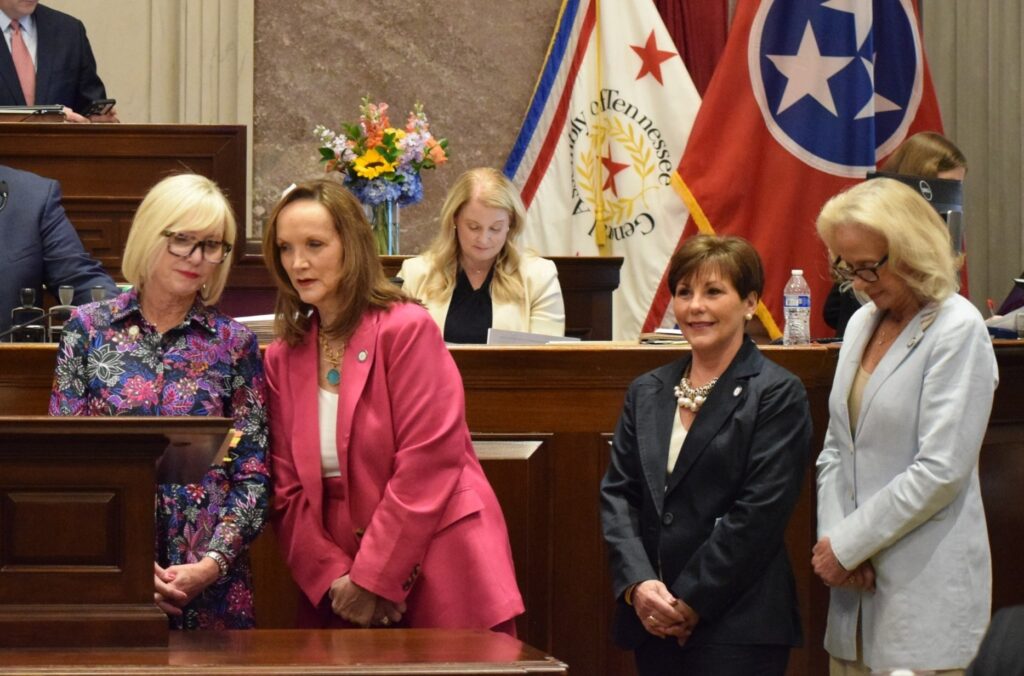
Matthew Davenport’s Law, or House Bill 1649, sponsored by State Rep. Esther Helton-Haynes, R-East Brainerd, establishes new criminal penalties for offenders and strengthens enforcement of the new statute designed to protect the public from the dangerous over-the-counter drug. The bill is named in honor of Matthew Davenport, of Chattanooga, whose life tragically ended at age 27 in 2024 following a lethal interaction between kratom and doctor-prescribed medications.
“This bill addresses the growing public health and safety concerns surrounding kratom, often marketed as a natural supplement, but natural does not equal safe,” Helton-Haynes told members on the House floor.
Kratom is widely available at gas stations, convenience stores, smoke and vape shops, rather than regulated pharmacies. Kratom comes from a tropical tree native to Southeast Asia. It is often used to self-treat and relieve pain, anxiety, depression, coughing or opioid withdrawals.
If the proposal becomes law, knowingly possessing kratom would be a Class A misdemeanor. Knowingly manufacturing, delivering, selling or possessing kratom with the intent to manufacture, deliver, or sell it would be a Class C felony. The penalty would increase to a Class B felony if the offense involves a minor and the adult is at least two years older than the minor.
The legislation would also require county medical examiners to test for kratom during autopsies whenever a drug overdose is suspected and that treating physicians include kratom in toxicology screens ordered for suspected overdoses or neonatal abstinence syndrome. The Tennessee Department of Labor and Workforce Development would be required to add kratom to its official definition of a “drug.”
Federal health agencies have also raised concerns about kratom. The U.S. Food and Drug Administration (FDA) warns the public against using kratom for medical treatment and states that no kratom-containing prescription or over-the-counter drugs are legally approved in the United States. Additionally, the FDA lists kratom as a “drug and chemical of concern” with potential for abuse.
The General Assembly signaled its support for strict regulations or a ban on kratom in 2025, passing House Joint Resolution 147 with bipartisan support.
House Bill 1649 is expected to be heard for consideration in the Senate chamber next week. If enacted, it will take effect on July 1.
Victims’ rights’ bill prepares TN for Marsy’s Law passage
The General Assembly on Thursday passed legislation to protect victims across the Volunteer State by increasing transparency and efficiency in the criminal justice process.

House Bill 2221, sponsored by State Rep. Paul Sherrell, R-Sparta, requires all criminal court clerks in the Volunteer State to provide the Tennessee Sheriff’s Association (TSA) with the necessary data for the criminal court notification system, Victim Information and Notification Everyday (VINE). The free and confidential system allows victims and concerned Tennesseans to check the status of court cases online, including custody and criminal case information. A victim can register online to receive notifications of custody status updates after a booking occurs.
“This November, voters will likely adopt Marsy’s Law into the Tennessee constitution,” Sherrell told colleagues on the House floor. “The criminal proceedings notification system is necessary to (comply) with Marsy’s Law, as the constitution will soon mandate that victims have the right to notification throughout the court process.”
Marsy’s Law is a proposed constitutional amendment that Tennessee voters will consider during the Nov. 3 election. The amendment establishes clear and enforceable constitutional rights for victims of crime, which includes the right to reasonable notice of all public criminal proceedings and juvenile delinquency proceedings. House Bill 2221 is a critical step in guaranteeing these rights for all victims in Tennessee.
The General Assembly in 2022 passed legislation expanding the VINE system to the courts. Currently, 87 of Tennessee’s 95 counties utilize the program. House Bill 2221 will help bridge this gap by requiring all counties to provide this vital information to protect victims. The proposal will immediately take effect upon Gov. Bill Lee’s signature.
GOP proposals bolster school safety
The General Assembly this week passed two bills to protect students, teachers and staff in schools across Tennessee.
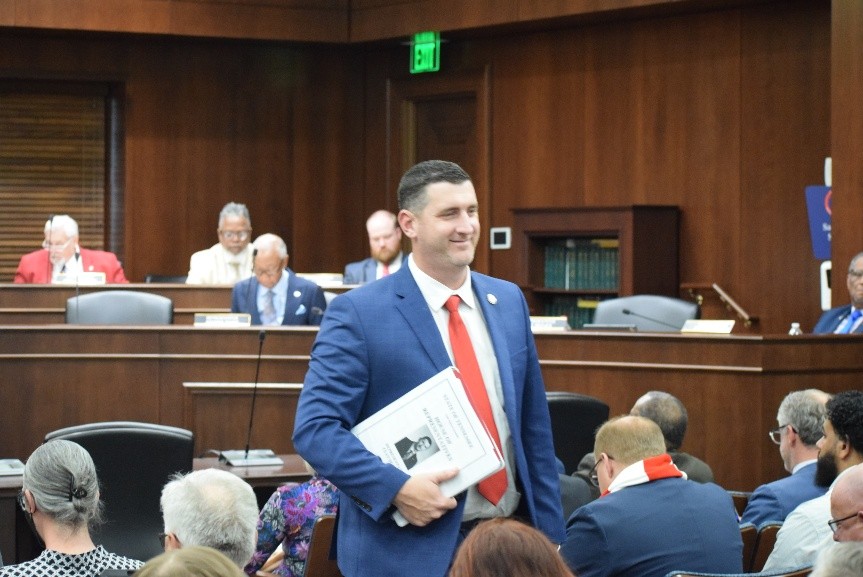
House Bill 1273, sponsored by State Rep Clay Doggett, R-Pulaski, requires all credible threats of mass violence against schools or school activities to be reported to the judicial system.
Currently, all threats, even those not deemed credible, are reported, leading to unnecessary legal hurdles and consequences, especially for students with intellectual or developmental disabilities.
“This bill [is] certainly not going to take away from the investigative purposes [and] it doesn’t limit those that can make reports of mass violence,” Doggett said. “All those will be thoroughly investigated.”
Threats would be deemed credible if they cause another to reasonably expect that an act of mass violence will take place. Knowingly failing to report a credible threat of mass violence is considered a Class B misdemeanor offense.
The General Assembly in 2023 passed a law creating a zero-tolerance policy for threatening school violence, resulting in automatic expulsion for at least one calendar year. Local directors of schools or heads of charter schools determine whether a student must attend an alternative school or virtual classes. House Bill 1273 now heads to Gov. Bill Lee’s desk. It will take effect July 1.
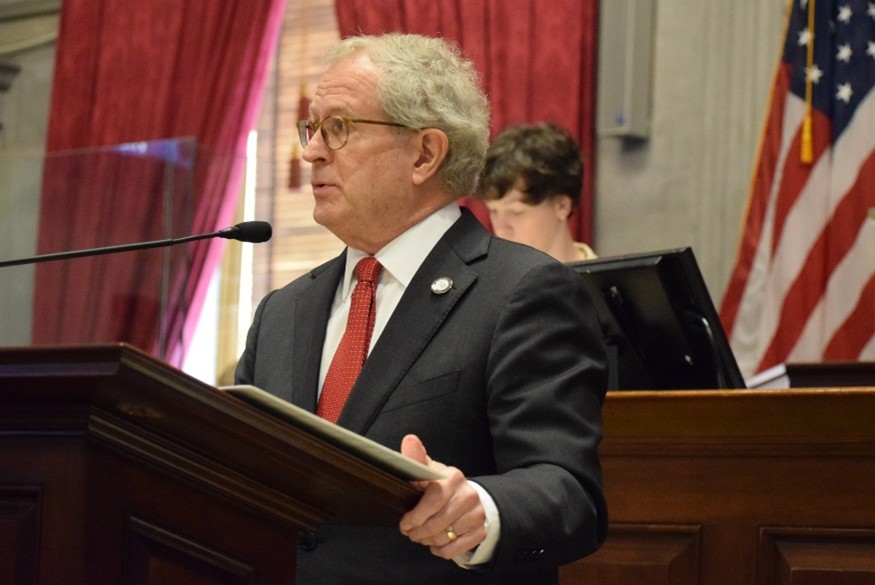
House Bill 1974, sponsored by State Rep. Mark White, R-Memphis, helps ensure schools respond quickly and effectively when a student is granted an order of protection against another student. The proposal requires schools to develop a safety plan for a protected student within five days of obtaining an order.
The principal and the school’s safety team, if applicable, will create the plan in consultation with a student’s parent or legal guardian. It must include several key protocols, including physically separating the students to the greatest extent possible, reporting and documenting any contact or attempted contact, and notifying local law enforcement if a violation is suspected. Additionally, a copy of the order must be provided to the school administration, resource officer or campus security.
“This particular bill was brought to me by a mother … and she had a daughter that was in school, and there was a male student that was making extreme sexual advances toward her daughter to the point that she had to get a court order of protection,” White told colleagues. “When she went to the school and the leadership, they really ignored her request to separate the young man from the same class.”
Physical separation plans can include removing a student with an order against them from shared classes, adjusting schedules to avoid hallway contact and designating separate lunch periods and breaks. Parents or guardians would be required to notify the school within 48 hours of any changes to the court order to revise the school safety plan accordingly.
House Bill 1974 passed the General Assembly this week and will take effect immediately upon the governor’s signature.
Step therapy exemptions provide new paths for patients
Republicans passed a bill that expands step-therapy exemptions for cancer patients in the House chamber this week, giving patients faster access to the medications they need.
House Bill 1956, sponsored by State Rep. Rebecca Alexander, R-Jonesborough, expands a law passed by the General Assembly in 2025 that prohibits health insurers from requiring step therapy before covering an approved prescription drug for patients with stage 4 metastatic cancer or blood cancer. The latest proposal expands those exemptions to all cancer patients.
“This legislation ensures doctors can prescribe the right medication for cancer patients at any stage of the disease without forcing them to try a potentially less effective option first,” Alexander said. “When it comes to cancer, every day matters, and getting the proper treatment early can save lives.”
Step therapy is a process where insurance companies require a patient to try a cheaper alternative medication before stepping up to a higher-level medication.
The companion version is still advancing in the Senate. If enacted, the expanded exemptions would go into effect Jan. 1, 2027.
Republicans hang up on robocalls
The House of Representatives on Thursday approved legislation that limits robocalls and establishes penalties to protect consumers. House Bill 2408, sponsored by State Rep. Charlie Baum, R-Murfreesboro, caps companies at 10,000 automated calls per month and requires companies to keep monthly records of their call volume.
“Too many Tennesseans, especially seniors, are being bombarded with endless robocalls trying to sell them products or scam them out of their money,” Baum said. “This legislation sets clear limits and holds bad actors accountable for abusing these systems.”
Companies that make 500 or more robocalls per month must submit those records to the Tennessee Public Utility Commission every six months and provide them upon request by the commission or the Tennessee attorney general and reporter.
If a company exceeds the 10,000-call limit, it would be considered an unfair or deceptive business practice under the Tennessee Consumer Protection Act, with civil penalties of at least $1,000 per violation. Companies could also be penalized for failing to track or report their calls.
The companion version is expected to be heard in the Senate for a vote in the coming weeks. If enacted, it would take effect July 1, with the reporting requirement for high-volume callers beginning on Oct. 1.
General Assembly shines light on hidden hotel fees
The General Assembly this week passed a proposal to increase transparency and protect Tennesseans’ pocketbooks.

House Bill 2180, sponsored by State Rep. Justin Lafferty, R-Knoxville, requires hotel websites and third-party booking sites to disclose when additional fees may apply to certain services and identify which services carry those extra costs. Services include things like parking, breakfast, or early check-in and late check-out.
“What’s been happening in practice, if you book through a third-party site, it will show you that parking is available and unless you click on another button to find out what the rest of the amenities are, you have no idea that you’re going to be charged until you get there for check in,” Lafferty told lawmakers ahead of the vote on Tuesday.
If a website fails to make these disclosures when listing such services, it would be considered a violation of the Tennessee Consumer Protection Act.
The bill provides an exception for third-party booking sites if the hotel itself did not supply the required fee information. It also does not apply to short-term rental units.
House Bill 2180 now heads to Gov. Bill Lee’s desk for his signature.
Bill expands resources for children with disabilities
A bill that aims to better serve and further protect children with disabilities in state custody gained final approval in the General Assembly this week.
House Bill 2188, sponsored by Children and Family Affairs Subcommittee Chairman Mary Littleton, R-Dickson, requires the Tennessee Department of Children’s Services (DCS) to collaborate with the Tennessee Department of Disability and Aging (DDA) to ensure children with intellectual or developmental disabilities in state custody, or at risk of coming into state custody, receive appropriate services and support.
“[The bill] authorizes the (DDA) to develop training for DCS related to identification and support for the child with a disability and to provide consultation on oversight tools and monitoring of residential services for children with disabilities,” Littleton told lawmakers ahead of the vote on Wednesday.
It also authorizes DCS to refer children suspected of having intellectual or developmental disabilities to the DDA for evaluation and service recommendations. The bill requires annual reporting to lawmakers on referrals, evaluations, training and care coordination.
House Bill 2188 now heads to Gov. Bill Lee’s desk for his signature.
Republicans strengthen federal immigration cooperation
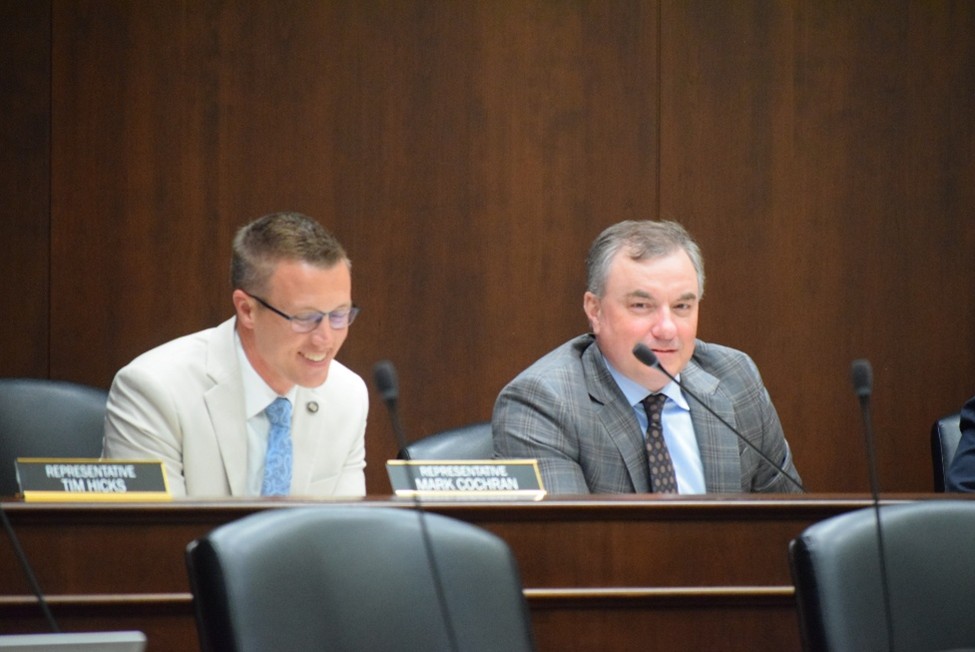
House Republicans this week passed legislation to build on Republican efforts to demagnetize Tennessee from the burden and dangers of illegal immigration. House Bill 2018, sponsored by Assistant House Majority Leader Mark Cochran, R-Englewood, requires local law enforcement agencies to honor federal immigration detainers by holding illegal alien detainees for up to 48 hours. This provides adequate time for federal officials to take custody.
“I think Tennessee is serious about enforcing the law. This enables us to do that further,” Cochran told the State and Local Government Committee on March 25.
The proposal applies only to law enforcement agencies in Tennessee that have memoranda of agreement with federal immigration authorities. Currently, under the 287(g) program, local law enforcement must notify U.S. Immigration and Customs Enforcement (ICE) when an illegal immigrant is in custody, but can release that person shortly after providing notification. House Bill 2018 closes this gap by ensuring the detainee is held for an adequate time period.
The Senate will consider the companion version of House Bill 2018 in the coming weeks. If passed and signed into law, it will take effect July 1.
Bill preserves Tennessee’s scenic rivers, bans nearby landfills
The General Assembly this week approved legislation that expands protections to the Duck River and other pristine waterways that provide drinking water for many in the Volunteer State.
House Bill 1510, sponsored by Speaker Pro Tempore Pat Marsh, R-Shelbyville, establishes a 2-mile buffer around segments of the Duck River, Buffalo River, West Piney River and East Piney River, in addition to several creeks. The new designations will restrict landfills within buffer zones, with limited exceptions.
“I live on the Duck River, and it is a beautiful river,” said Marsh. “This bill [seeks] to protect the most biodiverse waters in the country, as well as to protect the drinking water of millions of people in the Middle Tennessee area.”
Landfills that already have a valid permit when the law takes effect are grandfathered in and may still be built, operated, or expanded, even if within two miles of the area listed. The bill does not prohibit the development of landfills statewide, as significant acreage remains available for such uses outside the protected buffer areas, which would be subject to local approval and permitted by the Tennessee Department of Environment and Conservation.
House Bill 1510 now heads to Gov. Bill Lee’s desk to be signed into law.
Memphis Safe Task Force Accountability Act passes
The House of Representatives this week passed legislation to improve transparency and preserve the integrity of judicial rulings for violent crimes.
The Memphis Safe Task Force Accountability Act, or House Bill 1484, sponsored by State Rep. John Gillespie, R-Memphis, requires district attorneys serving in places where federal task forces are working to combat violent crime to report certain prosecutorial outcomes to the Tennessee attorney general and reporter, speakers of the House and Senate, the district attorneys general conference and the applicable U.S. attorney. The proposal applies to the Memphis Safe Task Force, a multi-agency initiative to combat violent crime.
“I, too, live in Memphis, and I can unequivocally say that today, Memphis is a safer place now than it was before this task force started,” Gillespie said on the House floor.
House Bill 1484 requires a monthly report to be submitted if a plea agreement is reached, a charged offense is lowered, a case is dismissed or a prosecutor declines to prosecute a serious offense resulting from an arrest by the Memphis Safe Task Force or another eligible federal task force.
The White House described the task force as delivering a “crushing blow to crime” in Bluff City, with more than 7,400 arrests, 1,219 illegal firearms seized and 150 missing children located since its launch in September 2025. Reports also show a sharp decrease in crime compared to last spring, including overall crime by 43%, motor vehicle thefts by 67%, robberies by 51%, sexual assaults by 38% and homicides by 35%. House Bill 1484 will take effect upon Gov. Bill Lee’s signature.
Democrat derangement of the week
State Rep. Justin Jones, D-Nashville, called for the impeachment and removal of President Donald J. Trump from office during the floor session on Wednesday, saying, “There’s a monster that’s going to destroy us all. His name is Donald Trump.”
“Someone’s stealing my rake. I can shoot to kill?” State Rep. Gloria Johnson, D-Knoxville, posed to State Rep. Kip Capley, R-Summertown, on a bill he’s sponsoring to protect Tennesseans’ property. “If you would feel comfortable explaining that in court, that would be on you, that you shot someone for stealing your rake,” Capley replied.
Briefly…
State and national security: The General Assembly this week passed legislation to prevent the use of public dollars to promote or subsidize enemies of the United States. House Bill 1884, sponsored by State Rep. Scott Cepicky, R-Culleoka, directs state agencies to deny, refuse to renew, or revoke certifications, registrations, licenses or permits issued to corporate entities if one of its employees or directors provides material support or resources to terrorist groups. Denial or revocation would occur only after a state agency receives satisfactory proof that someone has supported a designated entity, including those designated as foreign terrorist organizations by the U.S. Department of State or as specially designated by the U.S. Department of the Treasury. House Bill 1884 will take effect upon Gov. Bill Lee’s signature.
Dependency and neglect case tracking: A bill to improve data collection and tracking of dependency and neglect cases to further protect children now heads to Gov. Bill Lee’s desk to become law. House Bill 2352,sponsored by State Rep. Mary Littleton, R-Dickson, requires the Tennessee Administrative Office of the Courts to collect detailed information for each dependency and neglect case involving a child. The courts would be required to track ongoing case data such as placement history, case outcomes, permanency goals and foster care extensions. If enacted, it would take effect on Jan. 1, 2027.
International money transfers: The House on Thursday passed legislation establishing a new, targeted tax on certain international money transfers to invest in critical priorities for Tennesseans. House Bill 2502, sponsored by House Speaker Cameron Sexton, R-Crossville, and State Rep. Timothy Hill, R-Blountville, applies to money transfers originating in Tennessee and sent outside of the United States through licensed money transmitters. It assesses a $10 fee per transaction, along with a 2% tax on amounts exceeding $500. Financial institutions subject to existing excise taxes are exempt. Revenue generated by the measure, estimated to exceed $54 million annually, will be directed toward key state initiatives, including strengthening TennCare, expanding access to affordable child care through the Promising Futures Fund, supporting affordable housing, providing paid interns for future teachers, and contributing to the state’s general fund. The companion version of the bill is expected to be heard in the Senate chamber in the coming weeks.
Hunting for Heroes Act: The General Assembly this week passed legislation that entitles members of the Tennessee National Guard in good standing to qualify for a no-cost sportsman license. House Bill 2550, sponsored by House Majority Leader William Lamberth, R-Portland, creates the “Tennessee National Guard Sportsman” license. The annual sportsman license is an all-inclusive license valid for hunting, trapping, and sport fishing without any state supplemental licenses or non-quota permits and allows holders to apply for quota permits at no additional fee. The cost of an annual sportsman license for Tennessee residents is $168 annually. The bill heads to Gov. Bill Lee’s desk. It takes effect July 1.
Updates to the teacher code of ethics: A proposal to protect former students and provide clarity in the teacher code of ethics was approved by the House of Representatives this week. House Bill 1973, sponsored by Education Chairman Mark White, R-Memphis, adds a new section to the ethics code prohibiting educators from engaging in sexually-related behavior with a student in their school for 12 months after the student graduates or leaves. Prohibited behavior will include sexual jokes or remarks and engaging in inappropriate physical touching, among others. Violations could be reported to the Tennessee State Board of Education (SBE), which could lead to disciplinary action. The proposal prohibits a school board from requesting that the SBE temporarily suspend a teacher’s license when they resign without a justifiable reason. Currently, a teacher’s license may be suspended for up to a year if the SBE finds a contract breach occurred. House Bill 1973 removes these penalties to protect teachers. The bill now heads back to the Senate for final consideration.
Empowering local governments to reduce grocery taxes: The House on Monday passed legislation giving metropolitan governments new flexibility to reduce or eliminate local sales taxes on food. House Bill 2186, sponsored by House Majority Leader William Lamberth, R-Portland, authorizes metropolitan governments that levy a local option sales tax to apply a lower tax rate on groceries than on other goods and services, or to fully exempt food from the local portion of the sales tax. Current law already provides this authority to counties and municipalities; this bill extends the same authority to metropolitan governments. The measure allows local leaders to provide targeted tax relief on essential household items, helping make groceries more affordable for Tennessee families. The legislation does not affect state revenue and leaves the decision entirely in the hands of local governments, based on their communities’ needs. The companion version of the bill is expected to be heard in the Senate chamber in the coming weeks.
Protecting honest patient-doctor communications: House Bill 2259, sponsored by State Rep. Esther Helton-Haynes, R- East Brainerd, ensures that when health care providers or organizations share information in good faith with patients or their families about Quality Improvement Committee (QIC) activities, those conversations do not waive existing legal protections. A QIC is a group within a health care organization that is responsible for monitoring, evaluating and improving the quality and safety of patient services. The legislation provides clarity following the Tennessee Supreme Court’s 2025 decision in Castillo v. Rex, which created uncertainty for providers. The case involved a wrongful death lawsuit filed by Payton Castillo after her husband, Marshal Castillo, died while in the care of CHI Memorial Hospital and other providers in Chattanooga. The Tennessee Supreme Court held that the QIC privilege is waivable. The legislation ensures providers can have open and transparent conversations with patients and their families without fear while still maintaining accountability. The legislation does not require hospitals to disclose QIC findings and does not limit a patient’s ability to file a lawsuit due to negligence. House Bill 2259 is expected to be heard on the Senate floor in the coming weeks.
Due process for Brady letters: The General Assembly this week approved legislation to ensure law enforcement officers are adequately notified and have a chance to respond and seek reconsideration before and after being placed on a Brady list. Brady letters are lists maintained by prosecuting agencies of police officers whose honesty or credibility has been called into question for criminal conduct or integrity issues. If an officer receives a Brady letter, the report typically follows them throughout their entire career. House Bill 1254, sponsored by State Rep. Rebecca Alexander, R-Jonesborough, formalizes how Brady lists are handled, adds due process protections for officers and keeps the lists confidential and exempt from public records requests. The proposal also protects prosecutors from lawsuits. The bill now heads to Gov. Bill Lee’s desk for his signature.
Law Day: The General Assembly this week passed legislation to designate May 1 annually as Law Day in Tennessee. House Bill 1529, sponsored by State Rep. Gino Bulso, R-Brentwood, honors the rule of law as the bedrock of our state and nation’s political system. The proposal points to former President Dwight D. Eisenhower first proclaiming May 1 as Loyalty Day to serve as a beacon of hope to those blighted by the injustices of communism. On May 1, 2025, President Donald J. Trump issued a proclamation designating Loyalty Day and Law Day, calling the rule of law the “capstone of our constitutional order and the crown jewel of the American way of life.” House Bill 1529 will now head to Gov. Bill Lee’s desk for his signature.
Adult entertainment establishments: The House of Representatives this week passed House Bill 2314, sponsored by State Rep. Monty Fritts, R-Kingston, to require establishments like strip clubs and adult stores that sell sexually oriented content to post signs at entrances and near explicit content stating that such actions and materials may contribute to domestic violence, sexual assault and human trafficking. The proposal includes specific warning language for each sign and requires the signs to be no smaller than 8.5 by 11 inches. The signs must be posted for an establishment to receive or renew its license. The companion version of the bill is expected to be heard in the Senate for a vote in the coming weeks. If enacted, it would take effect immediately upon the governor’s signature.
Property owner protections: Lawmakers this week approved House Bill 1762, sponsored by State Rep. Ron Gant, R-Piperton, which requires that deeds in Tennessee be prepared only by trained professionals, licensed attorneys, licensed title insurance agents, title insurance companies, or property owners or someone legally authorized to act on their behalf, with certain exceptions. The proposal also strengthens the verification process by requiring a sworn declaration or a notarized affidavit identifying the preparer of the deed and confirming their legal authorization. The proposal seeks to address a rise in fraudulent and poorly drafted deeds in Tennessee, which can lead to financial loss, title defects and property disputes. House Bill 1762 will soon head to Gov. Bill Lee’s desk for his signature. It will take effect July 1 and apply to conveyances of real property on or after that date.
Unauthorized homeless relocations: The General Assembly this week approved a Republican proposal to support homeless Tennesseans by ensuring adequate housing and support services before being relocated to a new city. House Bill 1671, sponsored by State Rep. Tim Rudd, R-Murfreesboro, would prohibit local governments from relocating homeless people to another jurisdiction without written consent from the receiving municipality. The proposal also allows relocations if the municipality has a program for reuniting individuals with their place of origin. House Bill 1671 prohibits the use of public funds for relocation unless the receiving jurisdiction has available housing and other necessary services, or if the relocation is through an established reunification program. Jurisdictions impacted by violations of this measure could seek damages and injunctive relief against the local government that improperly relocated individuals. Law enforcement is exempt from this measure. House Bill 1671 will take effect upon Gov. Bill Lee’s signature.
Eliminating permit fees for pet raccoons: The General Assembly this week passed House Bill 2499, sponsored by State Rep. Kip Capley, R-Summertown, to eliminate the fee required to own a pet raccoon in Tennessee. Currently, residents issued a permit by the Tennessee Wildlife Resources Agency must pay a $31 fee to own a raccoon, as long as the person has documentation indicating the animal originated from a legal source. Capley’s proposal retains this requirement and ensures raccoons are non-native and not captured from the wild. House Bill 2499 now heads to Gov. Bill Lee’s desk for his signature. It will take effect July 1.
Disaster relief funding: Lawmakers this week approved legislation to expand the Governor’s Response and Recovery Fund. House Bill 2543, sponsored by House Majority Leader William Lamberth, R-Portland, and State Rep. Tim Hicks, R-Gray, authorizes the fund to provide aid to disaster-affected individuals when federal assistance is unavailable or unlikely to be available. It also provides support to local governments, school districts and municipalities for emergency repairs and essential services, including debris removal, roads and bridges, public buildings, utilities and equipment. Grants require a local cost share based on the county’s economic status, though the governor may waive part or all of it. Projects must be generally completed within 18 months, and funds cannot cover insurance deductibles. If enacted, the bill takes effect July 1. It now heads to Gov. Bill Lee’s desk for his signature.
Updating alcohol laws regarding celebrity endorsements: Lawmakers this week approved legislation to modernize Tennessee’s alcohol laws while preserving the integrity of the three-tier system. House Bill 2272, sponsored by State Rep. John Crawford, R-Bristol/Kingsport, allows manufacturers, wineries and nonresident sellers to maintain a direct or indirect interest in a licensed retail establishment if held in an irrevocable trust managed by an independent trustee. Individuals participating in the trust will be allowed to enter into licensing agreements for use of their name, image and likeness, but are prohibited from participating in daily operations. These agreements allow compensation through fixed fees or a percentage of the sales, not exceeding 10%. Tennessee’s three-tier system separates the alcohol industry by manufacturers, wholesalers and retailers, with each operating independently to promote a safe alcohol environment for consumers. House Bill 2272 will immediately take effect upon the governor’s signature.
Unlawful surveillance at ticketed events: The General Assembly this week passed House Bill 2368, sponsored by State Rep. Clay Doggett, R-Pulaski, which creates a Class A misdemeanor offense for operating a drone within 400 feet of or above a ticketed entertainment event in Tennessee. The measure outlines several exceptions, including law enforcement, employees of utility service providers, venue employees, those who have obtained consent from a legal authority and people authorized by the Federal Aviation Administration. Private property owners retain the right to operate drones above their property as long as they comply with federal regulations and do not interfere with or unlawfully surveil the event. House Bill 2368 applies to sporting, music and performing arts events that require entry tickets. The proposal is awaiting approval in the Senate.
Protecting small businesses from big tech: The General Assembly this week passed legislation to protect Tennessee business owners from unfair online blacklisting. House Bill 2028, sponsored by House Republican Caucus Chairman Jeremy Faison, R-Cosby, requires search engines to provide notice to the business of blacklisting within five days of the action. A clear explanation of any rules or policies violated, steps for appeal, and direct contact information for a company representative must be included. The practice of online blacklisting includes reducing visibility or accessibility of a small business’s website, removing it from search results, or deleting more than 25% of reviews. House Bill 2028 also creates a cause of action if an entity fails to comply with this measure. Faison’s proposal doesn’t ban deplatforming or review process but requires an explanation and provides small businesses with an avenue for resolution. It takes effect July 1.
Drug pricing auditing and compliance: Legislation to strengthen oversight and stewardship of non-governmental organizations participating in the 340B drug pricing program passed the House this week. House Bill 1648, sponsored by State Rep. Esther Helton-Haynes, R-East Brainerd, requires non-governmental 340B entities to comply with state-regulated fiscal and program requirements. The 340B program allows qualified organizations to offer outpatient drugs at lower costs to vulnerable populations. State agencies that administer 340B grants must verify the organization’s compliance with funding guidelines. The new legislation affirms that the Tennessee Comptroller of the Treasury may conduct an audit if warranted. House Bill 1648 passed the General Assembly and awaits the governor’s signature.
State veteran cemeteries: The General Assembly this week passed legislation recognizing all veterans in the Volunteer State who have served our nation honorably. House Bill 1635, sponsored by State Rep. Jerome Moon, R-Maryville, permits members of the U.S. National Guard and U.S. Reserve forces to be buried at state veteran cemeteries. Veterans must have been honorably discharged and completed all service obligations. House Bill 1635 now heads to the governor’s desk for his signature.
Water infrastructure for rural communities: The General Assembly this week passed House Bill 2205, sponsored by State Rep. Kelly Keisling, R-Byrdstown, which requires the Tennessee Department of Environment and Conservation to include counties with populations of 57,000 or fewer on its loan-consideration priority list for funding through the Drinking Water System Revolving Loan Fund. The legislation would apply to 58 of Tennessee’s 95 counties, representing approximately 61% of the state. House Bill 2205 now heads to Gov. Bill Lee’s desk for his signature.
Immunizations: The House on Monday approved legislation to promote public health and strengthen safeguards against influenza. House Bill 2569, sponsored by State Rep. Sabi Kumar, R-Springfield, increases opportunities for more patients to receive flu vaccinations by requiring hospitals to offer immunizations to all inpatients ages 50 and above before being discharged. Currently, Tennessee law requires hospitals to offer immunizations to inpatients 65 years or older. The companion version of the bill is expected to be considered on the Senate floor in the coming weeks.
Pain management transparency: The General Assembly passed legislation this week to reform pain management clinic licensure laws. House Bill 2572, sponsored by State Rep. Sabi Kumar, R-Springfield, authorizes the Tennessee Department of Health (DOH) to determine criteria to identify high-risk prescribers of opioids. The department would also publish inspection requirements for complying with the state’s pain management regulations on its website and establish criteria for identifying high-risk prescribers. House Bill 2572 now heads to Gov. Bill Lee’s desk for signature.
Tourism zoning: The House on Monday passed legislation to protect Tennessee business owners, jobs and visitors in tourism hotspots across the state. House Bill 2366, sponsored by State Rep. David Hawk, R-Greeneville, establishes a statewide framework for Tennessee’s eight Tourism Development Zones (TDZ) to keep them open, clean and thriving. The bill provides streamlined access through TDZs by addressing maintenance and upkeep and helping ensure they remain free from street blockage during emergencies. The Tennessee Highway Patrol would be permitted to assist local law enforcement agencies. Local municipalities would be given leeway to develop innovative solutions to develop TDZs, ensuring they align with state-regulated tourism zoning laws. House Bill 2366 is expected to be considered by the Senate in the coming weeks.
Curbing underage vape usage: The General Assembly this week passed House Bill 1679, sponsored by State Rep. Debra Moody, R-Covington, which expands the legal penalties for minors who unlawfully purchase, possess or accept tobacco, hemp, vape or smokeless nicotine products. First-time offenders may be required to complete community service work, a court-ordered preventative tobacco and vape use program and participate in an informal 90-day adjustment period. Repeat violators would be subject to probation for up to six months in addition to completing community service work and a court-ordered program. House Bill 1679 now heads to Gov. Bill Lee’s desk for his signature.
Protecting children in state custody: The General Assembly this week approved legislation to further protect vulnerable children in state custody. House Bill 2154, sponsored by State Rep. Kevin Raper, R-Cleveland, requires court-appointed guardians ad litem, which is an attorney entrusted to care for children during divorce proceedings, to participate in early childhood, childhood and adolescent development training administered by the Tennessee Administrative Office of the Courts. The required training would come at no cost to attorneys, be conducted virtually and include three hours of instruction. House Bill 2154 takes effect upon the governor’s signature.
Trump Accounts for kids: The House chamber this week approved legislation to create a pathway for the Tennessee Department of the Treasury to manage Trump Accounts. The Tennessee Trump Account Program Act, sponsored by State Rep. Charlie Baum, R-Murfreesboro, allows the department to act as a custodian of the accounts, rather than a traditional bank or the parent, if approved under federal guidelines. Trump Accounts are federally authorized investment accounts designed to help give children a financial head start. The accounts are held in the child’s name to grow over time, and they get access to the money when they turn 18 years old for education, housing or other expenses. The parent is traditionally the custodian unless the state is also authorized to serve in that role. The companion version of House Bill 1447 is expected to be heard in the Senate for a vote in the coming weeks.
Health care access: The House this week passed legislation to phase out active Certificates of Public Advantage (COPA) in the Volunteer State. House Bill 2278, sponsored by House Republican Caucus Chairman Jeremy Faison, R-Cosby, will require that COPAs, which are regulatory mechanisms to displace competition among health care providers, expire by June 30, 2028. All active pricing restrictions will remain in effect and be supervised by the Tennessee attorney general and reporter until the fifth anniversary of the expiration date, or until inpatient acute care competition is restored. There is only one active COPA in Tennessee, created in 2018 to allow Mountain States Health Alliance and Wellmont Health System to merge under the name Ballad Health in an attempt to keep health care costs low in a region with limited competition. The companion version of House Bill 2278 will be heard for a final vote on April 13.
Artificial intelligence: The General Assembly this week passed legislation to preserve the legal rights and benefits of human life by ensuring that artificial intelligence is not defined as a human. House Bill 849, sponsored by State Rep. Michele Reneau, R-Signal Mountain, establishes that a human life or natural person does not include artificial intelligence, a computer algorithm, software program or computer hardware. House Bill 849 now heads to Gov. Bill Lee’s desk to be signed into law.
Probation and aggravated assault offenders: A proposal by State Rep. Andrew Farmer, R-Sevierville, would limit the opportunity for a person convicted of certain violent crimes to receive probation. House Bill 1962 removes the presumption that individuals convicted of aggravated assault involving the use or display of a firearm would be a favorable candidate for probation. House Bill 1692 was placed behind the budget for consideration at a later date.
Fireworks: House Bill 2223, sponsored by Speaker Pro Tempore Pat Marsh, R-Shelbyville, broadens the variety of fireworks retailers are permitted to sell by adding a new category to the list of state-approved products. Some of the newly approved fireworks include party poppers, snappers, ground sparklers and glow worms. The expansion does not include fireworks that discharge in the air. The legislation is permissive and allows local municipalities to pass legislation limiting or banning the use of products added to the new category. House Bill 2223 was placed behind the budget for later consideration.
Hiring processes: The General Assembly this week passed legislation to ensure applicants aren’t permanently barred from certain jobs because of past psychological exams. House Bill 2074, sponsored by State Rep. Greg Vital, R-Harrison, permits an applicant pursuing a job that requires a badge to seek a second psychological evaluation in the event the applicant did not pass the first psychological exam. The legislation does not require employment reconsideration, but it does allow departments to reconsider the employment decision. House Bill 2074 now heads to the governor’s desk.
Fiscal transparency: Legislation to increase fiscal transparency and accountability by expanding the state’s statutory access to financial data and records advanced in the House this week. House Bill 2281, sponsored by State Rep. Brock Martin, R-Huntingdon, requires state departments, agencies, boards, commissions and other governmental entities to electronically provide access to financial records to the General Assembly’s fiscal review committee. The legislation also requires the Tennessee Department of Finance and Administration to provide the state budget formulation and management system to the General Assembly’s Office of Budget Analysis. House Bill 2281 was placed behind the budget for consideration at a later date.
Access to medication: The General Assembly this week passed legislation to modernize Tennessee’s laws regarding the sale of pseudoephedrine, which is the active ingredient in cold, allergy and decongestant medications. House Bill 2101, sponsored by House Republican Caucus Chairman Jeremy Faison, R-Cosby, allows Tennesseans to purchase the medications online if they provide government-issued identification, which would be verified by the seller and shipped only to the address on the ID. This proposal does not change any federal regulations governing the sale of these products, including daily, monthly and annual purchase caps. Additionally, House Bill 2101 updates how purchases are tracked by requiring the use of a state-coordinated electronic tracking system over the existing National Precursor Log Exchange. Sellers would be required to submit the transaction to the system before completing a sale. House Bill 2101 now heads to Gov. Bill Lee’s desk to be signed into law. It will take effect July 1.
Elder financial exploitation: Legislation to give the Tennessee Bureau of Investigation (TBI) more flexibility in handling reports of elder financial exploitation cleared the House of Representatives this week. House Bill 354, sponsored by State Rep. Dennis Powers, R-Jacksboro, allows the TBI to investigate cases directly when appropriate and decide on a case-by-case basis whether to coordinate with a district attorney, other law enforcement agencies or adult protective services. The change replaces the previous requirement enacted in 2024 when the General Assembly created the Elder Financial Abuse Hotline. The bill now heads to Gov. Bill Lee’s desk for his signature. If enacted, it would take effect immediately.
Parental rights petitions for children in foster care: A proposal to ensure foster parents are notified if a petition to terminate parental rights is filed for a child in their care passed the General Assembly this week. House Bill 2350, sponsored by State Rep. Mary Littleton, R-Dickson, requires the Tennessee Department of Children’s Services (DCS) to notify the foster parents within seven days of the petition being filed if the child has lived with them for at least nine months. It also ensures foster parents receive timely and ongoing information about the child’s background and needs, while requiring them to keep that information confidential. The bill now heads to Gov. Bill Lee’s desk for his signature.
Workforce development for engineers: The General Assembly approved legislation this week to expand the pathway for people to become licensed engineers. House Bill 2130, sponsored by State Rep. Tim Hicks, R-Gray, allows graduates of ABET ETAC-accredited engineering technology programs to become licensed professional engineers if they meet the exam and experience requirements. Applicants must meet education requirements, obtain references from licensed engineers, pass national exams and complete at least eight years of supervised engineering experience before receiving certification. The bill now heads to Gov. Bill Lee’s desk for his signature.
Driving privilege suspension for chronic absenteeism: The General Assembly this week approved a proposal to allow courts to suspend driving privileges for certain adjudicated delinquent juveniles. House Bill 2146, sponsored by State Rep. Renea Jones, R-Unicoi, allows a judge to suspend a juvenile’s driving privileges for up to one year if they are found adjudicated delinquent for chronic absenteeism or truancy and is found to be unruly. The suspension could apply to both existing driver licenses and a juvenile’s ability to obtain one, and would be in addition to any court-ordered penalties. The bill now heads to Gov. Bill Lee’s desk for his signature. If enacted, it would take effect Jan. 1, 2027.
Worker’s compensation: House Bill 2179, sponsored by State Rep. Justin Lafferty, R-Knoxville, restores a judge’s ability to award attorney fees and expenses when an employer unreasonably denies or delays benefits to an employee or dependent. It covers situations where the employer fails to provide medical care, disability benefits or death benefits as required under workers’ compensation laws. Fees and costs can also be awarded at an expedited hearing if the judge finds clear and convincing evidence. If enacted, these provisions apply to injuries occurring between July 1, 2026, and June 30, 2030. The General Assembly this week approved the proposal, which now awaits Gov. Bill Lee’s signature.
Nutrition education for physicians: The General Assembly approved legislation this week to ensure all Tennessee physicians have a baseline knowledge of nutrition. House Bill 2562, sponsored by House Majority Leader William Lamberth, R-Portland, and State Rep. Bryan Terry, R-Murfreesboro, requires medical doctors and osteopathic physicians to complete one hour of continued medical education on nutrition at no cost. If enacted, the requirement would begin Jan. 1, 2029, and end Jan. 1, 2033, unless extended by the legislature. The bill now heads to Gov. Bill Lee’s desk for his signature.
Fire investigators: Legislation clarifying authority and training for fire investigators cleared the General Assembly this week. House Bill 1870, sponsored by State Rep. Rick Scarbrough, R-Oak Ridge, allows the Tennessee Department of Commerce and Insurance commissioner, municipal fire investigators and county fire investigators to exercise police powers, including making arrests in arson cases, if they hold a current Tennessee Peace Officer Standards and Training (POST) certification. Investigators without POST certification may still conduct fire origin investigations, provided they are not exercising police powers. The bill includes a grandfather clause for investigators hired before Jan. 1, 2021, who are exempt from the requirement, while those hired on or after that date must obtain certification by Jan. 1, 2030. Certification requires approved recruit training and annual in-service training. If enacted, the bill takes effect on Jan. 1, 2028. The bill now heads to Gov. Bill Lee’s desk for his signature.
Drones over schools: The General Assembly approved a proposal this week to prohibit and penalize individuals who fly drones over school grounds. House Bill 2147, sponsored by State Rep. Renea Jones, R-Unicoi, creates a Class C misdemeanor offense for knowingly flying a drone over schools to conduct surveillance without permission from a school administrator or director of schools. The bill does not apply to law enforcement or commercial drone operations authorized by the Federal Aviation Administration. If enacted, the bill would take effect on July 1. House Bill 2147 now heads to Gov. Bill Lee’s desk for his signature.
Certified medication aides: The General Assembly this week passed House Bill 2531, sponsored by State Rep. Mary Littleton, R-Dickson, which creates a pathway for nursing students to become certified medication aides (CMA) if they complete coursework in nursing fundamentals, pharmacology and medication administration. The bill updates training requirements, allowing approved programs to be completed within 14 to 90 days, rather than the current 30 days. The proposal authorizes the Board of Nursing to adopt a program for the certification of out-of-state CMAs with comparable qualifications. The bill now heads to Gov. Bill Lee’s desk for his signature. If enacted, the bill would take effect on July 1.
Out-of-state nursing programs: The General Assembly this week approved the Tennessee Nursing Education Integrity and Oversight Act, sponsored by State Rep. Bryan Terry, R-Murfreesboro, to place a two-year pause on approving new out-of-state nursing education programs that seek to operate, enroll students or place students in clinical training in Tennessee. Existing programs already approved may continue operating but must submit data on student placements, outcomes and supervision. Accredited out-of-state nurse anesthesia programs are exempt. The bill also directs the Tennessee Center for Nursing Advancement and the Tennessee Board of Nursing to develop improved approval standards, reporting requirements and monitoring procedures for all out-of-state programs. The bill now heads to Gov. Bill Lee’s desk for his signature. If enacted, the moratorium would begin immediately.
Veteran motor vehicle sales tax: House Bill 1801, sponsored by State Rep. Greg Vital, R-Harrison, exempts active-duty military service members who are Tennessee residents but stationed out of state from motor vehicle sales tax. Currently, active-duty service members stationed in the Volunteer State are exempt from motor vehicle sales taxes. House Bill 1801 was placed behind the budget for consideration at a later date.
Expanding adoption opportunities: A Republican bill to expand adoption opportunities for children passed both chamber of the General Assembly this week. House Bill 1692, sponsored by State Rep. Michele Reneau, R-Signal Mountain, streamlines the adoption process in cases where a stable and established living arrangement already exists. The bill helps children achieve permanency more efficiently while maintaining necessary safeguards by allowing a court to waive the home study requirement for prospective adoptive parents who are not related to the child under certain conditions. To ensure the child’s safety remains the top priority, the court must make specific written findings that waiving the home study requirement is in the best interest of the child. A judge may waive the home study requirement if the child has lived in the prospective adoptive home for at least 12 months and custody has already been granted by a court following a full legal proceeding. The bill also requires a criminal background check through the Tennessee Bureau of Investigation and a review of the state’s sexual offender registry. The decision to grant a waiver remains at the court’s discretion. House Bill 1692 now awaits the governor’s signature to become law.