
114th General Assembly adjourns sine die
GOP Supermajority delivers wins for rural Tennessee, public safety, education
The 114th General Assembly adjourned sine die Thursday following a productive 2026 legislative session. The Republican supermajority enacted conservative policies that enhance public safety, drive health care reform, expand educational opportunity and reinforce Tennessee’s economic strength.
“This session was one of the most consequential in Tennessee history,” said House Speaker Cameron Sexton, R-Crossville. “We took bold action to be tougher on crime and illegal immigration, while strengthening enforcement and protecting our communities. We continued to enhance education freedom and healthcare freedom by allowing for more competition to undo the monopolistic marketplace. I’m proud of the General Assembly’s work to help all Tennesseans, address affordability and keep our state safe, strong, and a national leader in conservative policy.”
Republicans continued their strong record of fiscal discipline, keeping taxes low while ensuring state government operates with the greatest efficiency for the people it serves.
This year’s zero-debt $58.3 billion balanced budget advances Republican priorities with smart, targeted investments that secure Tennessee’s future and strengthen its well-earned reputation as a state where families thrive and businesses succeed.
“Tennessee remains a beacon of freedom and prosperity because we put Tennesseans first and govern with common sense guided by conservative values,” said House Majority Leader William Lamberth, R-Portland. “Families are thriving, businesses are flourishing and our state economy is strong. I am tremendously proud of our supermajority’s commitment to the people we serve and I am grateful to Governor Lee for his partnership in ensuring Tennessee remains the greatest state in the union.”
The session delivered a strong slate of conservative wins, including enhanced penalties for domestic violence and human trafficking, school safety grants, regulatory freedom legislation, campus free speech protections, parental rights expansions and support for law enforcement and first responders.
Republicans also advanced critical infrastructure projects, workforce development initiatives and stronger protections for vulnerable adults and children.
Healthy Tennessee Families
Recognizing the unique challenges facing rural communities, the legislature directed significant resources toward rural health care. Tennessee’s 2026 session also took a targeted, system-focused approach to health care competition and regulatory reforms.
These legislative efforts include:
- Quicker access to new FDA-approved medications (HB 2136 / SB 2556)
- FAIR Rx Act, major pharmacy reform that reduces conflicts of interest and increases transparency in drug pricing (HB 1959 / SB 2040)
- Created a new pathway for internationally trained physicians to practice in Tennessee, helping address provider shortages, particularly in rural communities (HB 2571 / SB 2366)
- Directed $205 million to utilize Shared Savings for health care initiatives, including funding Rural Health Transformation Resiliency Grants
- $230 million to TennCare to cover increasing costs associated with medical inflation, including higher prescription drug prices and Medicare payments and increased services
- Eliminated Certificate of Need (CON) for acute care hospitals, emergency rooms and cardiac catheterization labs (HB 819/ SB 1369)
- Terminated Certificates of Public Advantage (COPA) (HB 2278/ SB 2414)
- Expanded step therapy to all cancer patients (HB 1956 / SB 2081)
- Protected medical freedom through the SHIELD Act by ensuring providers are not penalized for treating patients who decline vaccinations (HB 2243/ SB 2070)
- Created a 3-year pilot program to support caregivers’ lost wages and expenses (HB 1443/ SB 1777)
Safer Communities
The General Assembly enacted new laws to strengthen public safety, along with first-in-the-nation legislation to expand enforcement of illegal immigration.
- Banned kratom, also known as “gas station heroin” (HB 1649 / SB 1656)
- Created a presumption against releasing defendants if they are charged with offenses involving a firearm that result in death or bodily injury (HB 33 / SB 218)
- Ensured victims of domestic violence and other crimes can use a substitute address to keep their home address hidden from their abusers (HB 1552 / SB 1640)
- Limited third-party groups from posting bail for criminal defendants (HB 1450 / SB 1708)
- Passed the Memphis Safe Task Force Accountability Act, which improves transparency and preserves the integrity of judicial rulings (HB 1484 / SB 1467)
- Established a Class D felony offense for coercive suicide (HB 1951 / SB 1815)
- Strengthened accountability for the Shelby County judicial system (HB 483 / SB 443)
- Expanded self-defense protections to include victims of human trafficking (HB 1354 / SB 1225)
- Added aggravating circumstances for prosecutors to pursue the death penalty for child rapists (HB 1454/ SB 1659)
- Required sex offenders to notify campgrounds of their status (HB 1922 /SB 1930)
Illegal Immigration Enforcement
- Established state-level criminal penalties for individuals unlawfully present in the U.S. who have received final orders of removal (HB 1704 / SB 1779)
- Required government employers to verify the work authorization status of all new hires and appointees (HB 1705 / SB 1922)
- Required law enforcement to honor federal immigration detainers by holding illegal aliens for up to 48 hours (HB 2018 / SB 1486)
- Ended sanctuary courts by requiring cooperation with federal immigration authorities (HB 1707 / SB 1952)
- Required written driver’s license exams to be administered in English, with a one-time limited exception (HB 1708 /SB 1889)
- Barred illegal immigrants from receiving professional licenses (HB 1709 / SB 1901)
- Required all TN sheriffs to enter into a memorandum of agreement with federal officials for immigration enforcement (HB 2219 / SB 2223)
Education
Lawmakers signaled significant support for K-12 education, including raising the minimum starting teacher salary to $50,000 and expanding the Education Freedom Scholarship program. The budget adds $339 million in new recurring dollars for K-12 education, bringing the total base Tennessee Investment in Achievement (TISA) budget to $7.1 billion and the overall public education budget to more than $9.4 billion for 2026-27.
- Expanded Education Freedom Scholarships to 35,000 (HB 2532 / SB 2247)
- Limited unnecessary screen time in elementary classrooms (HB 2393 / SB 2310)
- Loss of driving privileges for chronic absenteeism (HB 2146 / SB 2201)
- Closed truancy gaps to keep students on track (HB 1823 / SB 1968)
- Held virtual schools accountable to protect students (HB 2420 / SB 2441)
- Authorized intervention of Memphis-Shelby County Schools to improve outcomes (HB 662 / SB 714)
- Protected free speech on college campuses (HB 1476 / SB 1741)
- Ensured students can study the historical influence of Biblical values in America. (HB 1822 / SB 1828)
- Strengthened instruction on America’s foundingprinciples (HB 1857 / SB 1960)
Infrastructure, Economic Opportunity & Rural Investment
The General Assembly appropriated more than $890 million new dollars for infrastructure, transportation and economic development.
- Established a statewide framework for Tennessee’s eight Tourism Development Zones (TDZ) to keep them open, clean and thriving (HB 2366 / SB 2157)
- Created the Subterranean Transportation Infrastructure Coordination Authority to oversee key aspects of underground transit development, including the Music City Loop (HB 2450 / SB 2205)
- Updated governance framework for major Tennessee airports (HB 2507 / SB 2473)
- Strengthened Tennessee’s recycling marketplace focused on public-private coordination and economic development (HB 2518 / SB 1793)
- Created a public-private partnership initiative to increase access to affordable housing for working families (HB 2509 / SB 2410)
- $400 million for new and existing transportation projects, bringing TDOTs total General Fund allocations to $5 billion
- $81.2 million to support aviation infrastructure
- $25 million to the Tennessee Entertainment Commission for continued support for Tennessee’s music and film industries
- $25 million for Nuclear Industry Initiative Grants
- $20 million for upkeep and infrastructure of shortline railroads
Children and Families
- Protected children from being returned to abusive situations (HB 2127 / SB 2539)
- Developed guardrails for minor content creators (HB 1723 / SB 1469)
- Expanded resources for children with disabilities in state custody (HB 2188 / SB 2362)
- Protected parental rights regarding a child’s biological sex (HB 2082 / SB 1989)
- $34.5 million to the Tennessee Department of Children’s Services (DCS) to reduce caseload ratios
- $10.7 million to enhance staff safety at DCS facilities that accommodate delinquent youth
- Provided $7 million to Summer EBT program for 2027
- Provided financial benefit to families of electrical linemen killed in the line of duty (HB 1464 / SB 1907)
Government Efficiency:
- Giving local communities more representation over their electric service (HB 2592 / SB 2102)
- Passed the Regulatory Freedom Act to ensure transparency and hold state government agencies accountable for rule changes that cost the private sector money (HB 1913 / SB 2199)
- Aligned local elections with state election cycles (SJR 551)
- Created a pilot program to allow 10 counties with the highest caseloads to establish criminal magistrate positions (HB 2251/SB 2025)
- Reigned in frivolous out-of-state lawsuits and strengthened liability protections for Tennessee (HB 1971 / SB 1958)
- Allowed local governments to reduce sales tax on groceries (HB 2186 / SB2160)
Republicans pass Immigration 2026 agenda to put TN first
Tennessee Republicans this week passed a slate of immigration bills to protect Tennessee families and demagnetize the Volunteer State from illegal immigration.
Improving road safety
House Bill 1708, sponsored by State Rep. Kip Capley, R-Summertown, would require written driver’s license exams to be administered in English, with a one-time limited exception. It would also require applicants for vehicle registrations to provide proof of citizenship or lawful status in the United States.
“Understanding roadway signage and traffic laws is a fundamental requirement for safely driving in our state,” said Capley. “This legislation ensures that those granted the privilege of driving here have a basic command of the English language, strengthening fairness, accountability and public safety.”
The proposal would permit a one-time, limited exception allowing an applicant to take the written driver’s license exam in a language other than English. Applicants would be required to retake the exam in English after the limited license expires, with no translation dictionaries, electronic devices or interpreters.
House Bill 1708 also strengthens the vehicle registration process by requiring proof that an applicant is a citizen of the U.S., a lawful permanent resident, or someone whose presence in the U.S. has been authorized by the federal government for a specific purpose and period. Acceptable forms of ID would include a valid Tennessee driver’s license or a temporary Tennessee driver’s license or a photo ID.
House Bill 1706 by Deputy Speaker Jason Zachary, R-Knoxville, establishes a Class A misdemeanor for illegal aliens operating a commercial motor vehicle (CMV) in Tennessee and a Class A misdemeanor for a direct employer to knowingly allow a person unlawfully in the United States to operate a CMV.
“As blue states jeopardize American lives by recklessly issuing commercial driver’s licenses to illegal immigrants, Tennessee is taking decisive action to keep all families safe on our roads,” said Zachary.
The proposal requires law enforcement agencies to notify federal immigration authorities after arresting a person accused of violating this measure through the 287(g) program or Tennessee’s Centralized Immigration Enforcement Division.
Employers who knowingly allow illegal aliens to operate a CMV and state officials or employees of any state who issue a commercial driver’s license (CDL) to an illegal alien could be held liable to a person who suffers personal injury or property damage as a result, according to House Bill 1706.
Putting Tennesseans first
House Bill 1709, sponsored by Assistant House Majority Leader Mark Cochran, R-Englewood, requires applicants for professional licenses or certificates to provide proof of U.S. citizenship or lawful residence. The proposal would also ensure reciprocal licenses from other states meet the same criteria before being accepted in Tennessee.
The state of Tennessee grants professional licenses and certifications to ensure applicants have the qualifications to practice their occupation. Examples of roles that require state certification include physicians, dentists, teachers, attorneys, court reporters, aeronautics instructors, private investigators, realtors and more.
People seeking to practice as a physician could be eligible for a license if they offer proof of an application for a valid visa that would allow them to work in the U.S.
House Bill 1710, sponsored by State Rep. Dennis Powers, R-Jacksboro, requires city and county governments and local health departments to verify legal status for adults applying for public benefits. Currently, state agencies mandate this check to protect public funds. The legislation also requires reporting to the state’s centralized immigration enforcement division when applicants are determined to be ineligible.
“Tennessee taxpayers deserve confidence that public benefits funded by their hard-earned dollars are going only to those who are legally eligible,” Powers said.
The bill applies to a variety of state and federal programs designed to support low-income individuals, families, seniors and people with disabilities such as TennCare, Women, Infants and Children (WIC), Supplemental Nutrition Assistance Program (SNAP), Families First (TANF), unemployment benefits, subsidized child care and housing assistance, and other programs managed primarily by the Tennessee Department of Human Services.
Applicants may continue receiving benefits while verification is pending. However, benefits must be terminated if final verification determines an individual is not lawfully present in the United States. The legislation also requires state and local entities to maintain documentation supporting eligibility determinations.
The Tennessee Attorney General is authorized to investigate complaints of noncompliance and enforce the law, including withholding state funds from local governments or local health departments when necessary.
The Tennessee Department of Children’s Services is exempt from disclosure requirements that would directly or indirectly identify children or families receiving services.
Strengthening immigration enforcement
House Bill 2219, sponsored by State Rep. Johnny Garrett, R-Goodlettsville, requires all county sheriffs in Tennessee to enter into a 287(g) agreement with federal immigration officials to assist in the enforcement, detention, and removal of illegal immigrants. Law enforcement agencies could enter into four different available programs through 287(g), including the jail enforcement, warrant service officer, task force, or tribal task force models. Sheriffs who fail to comply with this legislation could lose state funding, including through grants, contracts, statutes and state-shared taxes.
The Tennessee Corrections Institute Board of Control will adopt a policy for the temporary detention and custody of individuals detained through the 287(g) program, requiring certain detainees to be transferred to the U.S. Immigration and Customs Enforcement within 48 hours. Agreements could be temporarily suspended in emergencies that require the redirection of resources to respond.
House Bill 1707, sponsored by State Rep. Rick Scarbrough, R-Oak Ridge, will require Tennessee courts to cooperate with the U.S. Department of Homeland Security and other federal immigration authorities when they are enforcing immigration law. If a judge obstructs or interferes with federal immigration enforcement actions, the judge can be referred to the Tennessee Board of Judicial Conduct. If misconduct is found, it could lead to disciplinary action or removal from office under the Tennessee Constitution.
Memphis oversight board will hold district to higher standard
The General Assembly this week passed legislation to overhaul Memphis-Shelby County Schools (MSCS) to improve student academic outcomes and college readiness. House Bill 662, sponsored by State Rep. Mark White, R-Memphis, creates a local oversight board to assist the MSCS Board of Education in addressing areas of insufficient performance within the district.
“For too long, administrative mismanagement and inefficiency have undermined student success in Memphis. That ends now,” said White. “This oversight board is a necessary step to restore accountability to MSCS and ensure children in our community have the resources and support they so desperately need and deserve.”
The board of managers will serve for four years. It will be vacated if the LEA fails to meet certain benchmarks, and a new board will be appointed for two additional years. The proposal will ensure the district meets the needs of students in Shelby County and efficiently utilizes its budget, which totals nearly $1.9 billion this academic year. The oversight board will be required to conduct a comprehensive needs assessment (CNA) and create a transformation plan based on those findings. It will also be required to submit an annual progress report.
The existing MSCS board would be required to submit its proposed budget to the oversight board for approval before being adopted by the appropriate local legislative body. It would also prohibit the school board from authorizing any purchase or entering into, renewing, or amending any contract worth $50,000 or more without oversight.
The oversight board would have the ability to direct an action within the local board of education’s authority or prohibit the local board from taking a specific action if necessary to improve the LEA’s performance, operation or management. It could also terminate the employment of any LEA employee, including the director of schools. The oversight board is required to select an employee to fill these vacated positions, unless the position is redundant or unnecessary.
Oversight board members would be from Shelby County, with one exception. The governor will appoint five members and the speakers of the Tennessee House of Representatives and Senate will each appoint two. House Bill 662 now heads to Gov. Bill Lee’s desk to be signed into law. The board of managers will be formed following his signature.
Children’s Digital Protection Fund combats mental health crisis
The General Assembly this week approved legislation to protect Tennessee children by making targeted investments into support services.
House Bill 2270, sponsored by State Rep. Gary Hicks, R-Rogersville, will create the Children’s Digital Protection Fund (CDPF) to set aside money recovered from legal claims against social media, online gaming, and other digital technology companies to protect and restore the mental health and safety of Tennessee’s children.
“Tennessee children are facing an unprecedented mental health challenge and safety risks linked to social media, online gaming platforms and other digital technologies,” Hicks told the Judiciary Committee last month.
Funds deposited into the CDPF, including settlement proceeds, civil penalties, and accrued interest, would be strictly reserved for children’s mental health services, research, law enforcement efforts, and suicide prevention initiatives focused on digital safety. It will also deposit funds into the K-12 Mental Health Trust Fund, created by the General Assembly in 2021.
The state treasurer and the attorney general will oversee the fund’s management and expenditures, ensuring all recoveries remain dedicated to these specific purposes. House Bill 2270 now heads to Gov. Bill Lee’s desk to be signed into law.
Republicans improve safety, communication in TN prisons
Republicans in the General Assembly this week passed two bills to support correctional officers and the families of incarcerated individuals.
House Bill 2111, sponsored by House Majority Whip Clark Boyd, R-Lebanon, creates a State Family Advisory Board to help foster effective communication between the Tennessee Department of Correction (TDOC) and family members of incarcerated or formerly incarcerated individuals. The nine-member autonomous board will be appointed equally among Tennessee’s three grand divisions by the governor and the speakers of the House and Senate.
It is tasked with strengthening efforts for family reunification, building stronger families and communities upon reentry, and providing feedback on relevant activities within TDOC.
House Bill 1718, sponsored by State Rep. Fred Atchley, R-Sevierville, creates a one-year pilot program at Trousdale Tuner Correctional Center requiring correctional officers to wear body cameras while on duty and interacting with inmates.
Atchley recently told Finance, Ways and Means Committee members that an attorney from Trousdale Turner highlighted the need for the cameras. “He described a serious incident in which an officer was pulled into his cell by multiple inmates and repeatedly stabbed, but with only fixed camera angles, it was extremely difficult to determine exactly what happened, who was responsible and what charges should be filed.”
CoreCivic, a private prison operator that manages four prisons in the Volunteer State, will cover the cost of the cameras and storage, while TDOC will review footage of potentially abusive or unlawful incidents and provide it to prosecutors within 48 hours. Incident recordings must be kept for at least one year.
The legislation also requires TDOC to issue quarterly reports and a final report by June 30, 2027. Both bills are now headed to Gov. Bill Lee’s desk to be signed into law.
Promising Futures Act boosts retention of child care workers
The General Assembly this week approved legislation to increase access to affordable, reliable child care for Tennessee families. The Promising Futures Act, or House Bill 1979, sponsored by State Rep. Mark White, R-Memphis, creates the Promising Futures Fund to make targeted investments to strengthen and stabilize the child care workforce, support employer participation in shared child care cost models, expand access to child care for working families and provide recommendations for future programming and policy decisions.
“This is just part of continually building the framework … of trying to make sure we have child care available to those who want to work but, as we know, child care affordability sometimes is like in-state tuition and working families cannot afford it,” White said on the floor.
House Bill 1979 also creates the Child Care Workforce Scholarship pilot program to help recruit and retain child care workers and the CareShare Tennessee pilot program, which seeks to encourage employers to support child care assistance programs. Each program will receive $5 million from the Promising Futures Fund, which will be funded by legislation passed this year by House Speaker Cameron Sexton, R-Crossville, to establish a tax on certain international money transfers.
The bill also creates the Smart Steps Plus program to provide child care scholarships to working families whose income exceeds eligibility thresholds for existing child care assistance programs. These funds would be available to Tennesseans with incomes between 85% and 150% of the state median income.
House Bill 1979 now heads to Gov. Bill Lee’s desk to be signed into law.
Proposal restricts ‘electrification without representation’
The General Assembly this week approved legislation to ensure fair representation for customers of municipally owned electric utilities.
House Bill 2592, sponsored by House Majority Whip Clark Boyd, R-Lebanon, would add a voting member from each eligible county served by a municipally-owned utility company if the county has at least 3,500 ratepayers, ensuring representation on utility boards. The measure only applies in cities within counties that have a population of at least 485,000 people, which would include Shelby and Davidson.
“Wilson County has a portion of ratepayers that buy from [Nashville Electric Service], and I don’t believe in electrification without representation,” Boyd told House members.
If a home county has more than 130,000 people outside of the municipality, it would receive one additional board member.
The bill also promotes fairness in the annexation process by removing for one year the ability of a municipally-owned utility to force an electric co-op to sell its customer base and assets at a fixed rate. House Bill 2592 would require the utility to negotiate with the co-op to pay the market price established through a consensual agreement, applicable between Sept. 1, 2026 and Sept. 1, 2027.
House Bill 2592 will immediately take effect upon Gov. Bill Lee’s signature.
Ibogaine research coming to Tennessee
The General Assembly approved a bill this week to allow Tennessee-based research institutions to participate in federally authorized clinical trials studying ibogaine as a potential treatment for post-traumatic stress disorder (PTSD), traumatic brain injury and opioid addiction.
The Helping Open Pathways to Effective (HOPE) Treatment Act, sponsored by State Rep. Bryan Terry, R-Murfreesboro, authorizes hospitals, academic medical centers and universities in the Volunteer State to take part in ibogaine research.
“I’ve spoken with veterans who left the state for care and found real relief for the first time after years of failed treatments,” Terry said. “If we don’t act, Tennessee will fall behind in advancing transformative mental health care for our veterans and those battling addiction.”
Ibogaine has shown promise in reducing symptoms of PTSD, anxiety, and depression, as well as improved functioning in veterans with traumatic brain injuries, according to researchers at Stanford Medicine. The Tennessee Bureau of Investigation (TBI) estimates approximately 70,000 Tennesseans struggle with opioid addiction.
Ibogaine may now be administered as part of a federally authorized clinical trial under the supervision of a licensed physician. Participating institutions must follow federal safety guidelines.
The bill also provides legal protections for healthcare providers, researchers, patients and institutions participating in authorized clinical trials and allows them to receive federal, private and philanthropic funding.
The bill now heads to Gov. Bill Lee’s desk for his signature.
Bill overhauls car insurance compliance, verification system
The General Assembly approved a bill this week to restructure Tennessee’s vehicle insurance enforcement system by increasing penalties for uninsured drivers and expanding state verification tools.
House Bill 1690, sponsored by State Rep. Tim Hicks, R-Gray, significantly increases penalties for vehicle owners and lessees who fail to maintain required financial responsibility coverage. The initial coverage failure fee is increased to $500, the continued violation fee to $1,000 and a $1,500 penalty is added for repeat violations within three years.
“Right now, too many uninsured drivers are putting responsible families at risk,” Hicks said. “When they cause accidents, it’s not them who carry the burden, it’s the insured.”
The measure also expands data-sharing requirements for insurers, including weekly reporting of policy information to the Tennessee Department of Revenue to improve insurance verification.
In civil cases involving motor vehicle crashes, the bill limits noneconomic damages for uninsured vehicle owners or lessees who repeatedly failed to maintain coverage despite multiple notices, capping damages at $375,000, or $750,000 in catastrophic injury cases. Additional provisions include insurer data reporting on short-term policies, public messaging on insurance requirements and a repeal of prior verification provisions to streamline enforcement.
If enacted, the enforcement, penalties, registration rules and civil damage limits would take effect on July 1, 2027, while the reporting system setup, public awareness messaging and administrative rollout authority would take effect immediately.
GOP strengthens oversight of violent juvenile cases
The General Assembly approved legislation this week to improve oversight of serious juvenile cases and establish clearer limits on how long children may remain in the care of the Tennessee Department of Children’s Services (DCS) for treatment. House Bill 2526, sponsored by House Majority Leader William Lamberth, R-Portland, and State Rep. Mary Littleton, R-Dickson, creates a task force to examine cases involving children in DCS custody for serious offenses such as murder or attempted murder, as well as children found incompetent to be adjudicated delinquent or who have exhibited violent behaviors that could constitute a delinquent offense.
The task force would include representatives from various agencies and organizations, including DCS, the Tennessee Department of Mental Health and Substance Abuse Services, the District Attorneys General Conference, the Tennessee Council of Juvenile and Family Court Judges and a licensed attorney who regularly serves as guardian ad litem.
“The second part of the bill provides a sentencing direction for youth that have been adjudicated delinquent and committed to DCS custody under the health and safety exception,” Littleton said.
The legislation specifically sets limits on how long a child placed in DCS custody for treatment or services may remain in state custody. In most cases, custody is capped at six months, but a court may extend it for up to an additional six months if the child still needs in-custody treatment or if they assault a staff member. The extension for assault does not require a separate delinquency adjudication. The bill also requires courts to notify children at commitment that assaulting staff may extend their custody period. House Bill 2526 now heads to Gov. Bill Lee’s desk for his signature.
Bill improves Tennessee’s utility laws
The General Assembly this week approved legislation making several changes to resolve widespread operational and governance challenges among utility entities across the Volunteer State.
House Bill 1673, sponsored by State Rep. Rush Bricken, R-Tullahoma, mandates continuing education requirements for utility board members and includes enforcement provisions allowing for sanctions and repayment of compensation if those requirements are not met. The bill also clarifies processes related to board member eligibility, petitions for sanctions and board member reinstatements.
“This bill will clarify areas of utility regulations based on the recent experience of the Tennessee Board of Utility Regulations,” said Bricken.
Most notably, the legislation mandates that the Tennessee Board of Utility Regulation (TBOUR), which is responsible for regulating water, sewer and natural gas utility companies owned by local governments, will oversee joint ventures that provide wholesale water or wastewater services between governmental entities.
Utility systems would be permitted to issue internal loans under guidelines set by the Tennessee Comptroller of the Treasury and provide TBOUR with authority to conduct feasibility studies for struggling systems, including evaluating potential mergers or consolidations with nearby utilities. House Bill 1673 further defines the conditions under which financially strained utility systems may be subject to intervention and establishes a framework for the creation, consolidation or merger of utility districts.
Oversight of local government utility entities by the TBOUR began June 30, 2025, due to significant operational, financial and governance deficiencies, underscoring the need for stronger oversight and accountability across utility systems. House Bill 1673 now heads to Gov. Bill Lee’s desk to be signed into law.
New courts, judges will support Shelby Co. judicial system
Legislation to support Memphis and Shelby County in prosecuting violent crimes more efficiently passed the General Assembly this week. The Violent Criminal Court Act, sponsored by State Rep. Rick Scarbrough, R-Oak Ridge, adds two courts and two judges to the 30th Judicial District to focus solely on serious violent offenses.
“With all the increased arrests and backlog, we need to go ahead and add these additional judges to (the 30th Judicial District) to improve efficiency and prosecution,” Scarbrough said.
Since the Memphis Safe Task Force was launched by President Donald J. Trump in September,officers have made more than 8,000 arrests, including 57 for homicide, 918 for controlled substances, 752 for firearm violations and 104 for sex offenses, as of April 20.The governor will appoint the two judges to serve until 2028 and after that the judges will be elected by Shelby County voters to eventually serve full eight-year terms. According to this proposal, existing courts can transfer serious criminal cases into these new courts to reduce case backlogs and focus attention on high-priority cases.
House Bill 1268 heads to Gov. Bill Lee’s desk for his signature.
Accountability, safety measures for DCS approved
The General Assembly this week passed House Bill 1966, sponsored by State Rep. Andrew Farmer, R-Sevierville, to establish a statewide quality assurance program within the Tennessee Department of Children’s Services (DCS), strengthening oversight and outcomes for children and families. The legislation requires the development of a structured, data-driven system to monitor and evaluate service delivery across all regions. The program will include a state-level quality assurance committee and regional coordinators to ensure consistent standards and oversight.
“What this bill does is provide for a statewide quality assurance program within the Department of Children Services to ensure consistent, high-quality service delivery across the state of Tennessee,” said Farmer. “We want to make our children the number one priority, and this is one step in the right direction.”
The bill also creates a framework for ongoing, independent evaluation of services, with a focus on key outcomes such as child safety, permanency and overall well-being. It requires regular review of programs for compliance with federal, state and departmental policies and identifies areas for improvement and barriers to effective service delivery.
The program will incorporate feedback from local advisory boards and citizen review panels, while allowing for the creation of new advisory entities to further strengthen accountability and community input. House Bill 1966 now heads to Gov. Bill Lee’s desk to be signed into law. It will take effect July 1.
Briefly…
Protecting first responders: Legislation by State Rep. Kip Capley, R-Summertown, to add first responders to Tennessee’s Back the Blue Act cleared the General Assembly this week. House Bill 2428 would increase the offense of assaulting a first responder from a Class A misdemeanor to a Class E felony, punishable by a mandatory $10,000 fine and a minimum of 60 days in jail. In 2024, the General Assembly passed the Back the Blue Act, creating the same penalties for assaulting a law enforcement officer in the Volunteer State. House Bill 2428 now heads to Gov. Bill Lee’s desk to be signed into law. It will take effect July 1.
Capitol protection zone: The General Assembly passed House Bill 1504 on Monday, designating a Capitol Hill protection zone to bolster safety measures for state government officials, employees, and the public. The bill, sponsored by House Majority Leader William Lamberth, R-Portland, designates a defined security area encompassing key state buildings and surrounding grounds in Nashville. The protection zone includes the State Capitol, Capitol annexes, War Memorial Building, Legislative Plaza, Cordell Hull Building, Supreme Court Building, State Library and Archives Building, John Sevier State Office Building, James K. Polk State Office Building, William R. Snodgrass Tennessee Tower, World War II Memorial Building, Rachel Jackson Building, Andrew Jackson Building, and adjacent grounds, roads, and sidewalks. The bill authorizes the Tennessee Department of Safety and Homeland Security commissioner to assign POST-certified state facility protection officers to the zone, granting them concurrent law enforcement authority with local agencies, including the power to arrest, carry firearms and investigate crimes. House Bill 1504 now heads to Gov. Bill Lee’s desk to be signed into law. It will take effect Jan. 1, 2027.
Burglaries of conveyance: The General Assembly on Wednesday passed legislation to increase the penalty for burglaries of a conveyance from a Class E felony to a Class D felony. House Bill 555, sponsored by State Rep. Kip Capley, R-Summertown, applies to burglarizing freight or passenger cars, automobiles, trucks, trailers, boats, airplanes or other motor vehicles. The bill now heads to the governor’s desk to be signed into law. It will take effect July 1.
Protecting private property: Republicans in the General Assembly this week approved House Bill 1802, sponsored by State Rep. Kip Capley, R-Summertown, to strengthen Tennesseans’ ability to lawfully defend their property. The proposal will allow the use of deadly force if immediately necessary to protect property where a person lawfully resides in certain circumstances, including to prevent arson, burglary, robbery, aggravated robbery or aggravated cruelty to animals. There must be a reasonable belief that deadly force is necessary and that there is no safe alternative. While Tennessee is a Stand Your Ground and Castle Doctrine state, allowing residents to use deadly force in self-defense and against home intruders, residents are limited to threatening or using non-deadly force against another to protect private property. House Bill 1802 now heads to Gov. Bill Lee’s desk to be signed into law. It will take effect July 1.
Internet acceptable use policies in schools: Lawmakers this week gave final approval to legislation that will protect Tennessee students from being exposed to age- and grade-inappropriate content on school internet. House Bill 1886, sponsored by State Rep. Scott Cepicky, R-Culleoka, requires public school districts and charter schools to adopt an internet acceptable use policy that includes safety protocols, guidelines for effective parental communication to raise awareness of internet safety, rules for accessing email, chat rooms, or any other form of direct online communication, and safeguards to prevent students from accessing sites that don’t protect against the disclosure or dissemination of personal information. The policy must also prevent access to content that is pornographic, violent, harmful to students, or promotes self-harm. Providers of digital or online resources contracted with schools must filter or block prohibited content. The proposal requires parents to be notified if a student under 18 accesses a site using the school’s internet in violation of the acceptable use policy. House Bill 1886 now heads to Gov. Bill Lee’s desk to be signed into law. It will take effect July 1.
REAL ID: The General Assembly this week passed House Bill 2612, sponsored by State Rep. Bud Hulsey, R-Kingsport, to ensure Tennesseans understand that a REAL ID is not required. The proposal directs driver services centers across the state to inform people at the time of a driver’s license application or renewal that they have a choice between a REAL ID and a traditional Class D driver’s license. The Tennessee Department of Safety and Homeland Security‘s website must include a disclaimer that obtaining a REAL ID-compliant driver’s license is optional. House Bill 2612 now heads to Gov. Bill Lee’s desk to be signed into law. It will take effect July 1.
Organized retail crime: Lawmakers approved a proposal this week to crack down on organized retail crime in Tennessee. House Bill 2140, sponsored by Deputy Speaker Jason Zachary, R-Knoxville, requires a 30-day mandatory minimum jail sentence if a firearm or anti-theft device is used in the action of organized retail crime. The proposal also extends the timeframe used to combine stolen merchandise from 90 to 180 days, giving law enforcement more time to build cases against organized theft rings. Additionally, it creates a Tennessee Bureau of Investigation registry of individuals convicted of organized retail crime. House Bill 2140 now heads to the governor’s desk for his signature. It will take effect July 1.
Affordable housing pilot program: A proposal to address Tennessee’s growing housing challenges cleared the General Assembly this week. House Bill 2509, sponsored by House Speaker Cameron Sexton, R-Crossville, and House Republican Caucus Chairman Jeremy Faison, R-Cosby, establishes a $20 million public-private partnership initiative designed to increase access to affordable housing for working families earning between 80% and 150% of the area median income. It creates the Community Workforce Housing Innovation Pilot Program, administered by the Tennessee Housing Development Agency (THDA), to provide loans for the construction or rehabilitation of housing projects across all three grand divisions. The program will prioritize innovative housing projects in high-growth areas where rising home prices have made homeownership increasingly out of reach. The pilot program offers financial incentives and promotes regulatory flexibility. Priority consideration will be given to projects that include a significant share of workforce housing, are located near major employment centers and involve local incentives or partnerships. Applications for the pilot program will be accepted through March 31, 2027, with a full evaluation of the program’s effectiveness required by Jan. 1, 2029. House Bill 2509 now heads to Gov. Bill Lee’s desk to be signed into law.
Protecting Tennesseans from bank jugging: The General Assembly this week passed legislation by State Rep. Tim Rudd, R-Murfreesboro, to protect Tennesseans from being victims of theft. House Bill 1668 establishes a Class A misdemeanor offense for knowingly traveling along the same path as another person leaving a financial institution or ATM with the intent to commit theft of their cash, also known as bank jugging. A person must have two or more criminal instruments that could be used in the commission of an offense. Burglarizing or robbing after jugging would increase the penalty to a Class D felony or Class B felony, respectively. House Bill 1668 now heads to the governor’s desk for his signature. It will take effect July 1.
Protecting victims of coercive suicide: Lawmakers this week unanimously passed legislation to protect Tennesseans from being manipulated into harming themselves. The Grace Anne Sparks Coercive Suicide Prevention Law of 2026, or House Bill 1951, will create the Class D felony offense of coercive suicide, which includes intentionally encouraging or aiding another person to commit or attempt to commit suicide within a certain period of time. The legislation is named in honor of Grace Anne Sparks, a 19-year-old girl from Knoxville who shot herself after an Indiana man had manipulated and groomed her for years. The man was communicating with Sparks over video chat, where he encouraged her to place a bullet in a revolver, spin it, and put it to her head to pull the trigger. House Bill 1951 will provide prosecutors with an additional avenue to protect victims and hold offenders accountable by establishing a Class D felony, punishable by up to 12 years in prison. To be considered coercive suicide, an offender must know that the other person has communicated an intent to commit suicide, according to the legislation. House Bill 1951 now heads to Gov. Bill Lee’s desk to be signed into law. It will take effect July 1.
Early educator workforce development: This week, lawmakers approved a proposal to support career development and produce quality early educators in Tennessee. House Bill 2426, sponsored by State Rep. Mark White, R-Memphis, creates the Early Educator Workforce Development Resources Task Force to assess the current resources available to early educators or aspiring teachers, including education, workforce and training. The task force, led by the Tennessee Department of Labor and Workforce, will also identify gaps and opportunities to strengthen workforce pathways and Tennessee’s child care landscape. Finally, it will make recommendations to better align and leverage existing investments. The task force’s report will be submitted by Dec. 31, 2026. House Bill 2426 also directs the Tennessee State Board of Education to create a pathway for an innovative early educator apprentice model, allowing people to earn key credentials while working in the early childhood setting. The bill now heads to the governor’s desk to be signed into law. It will take effect July 1.
Property line monuments: The General Assembly this week passed House Bill 2026, sponsored by State Rep. Ryan Williams, R-Cookeville, to create a Class A misdemeanor offense for removing a property corner monument or marker. It also applies to historic land surveying monuments and geodetic control monuments. Employees or contractors of the Tennessee Department of Transportation are exempt if engaged in official duties. Property corner monuments include iron or steel pipes, concrete markers, stone, trees, temporary wooden stakes and markings on trees, concrete or metal. House Bill 2026 now heads to Gov. Bill Lee’s desk for signature.
Law enforcement retention: The General Assembly this week approved House Bill 2204, sponsored by State Rep. Ryan Williams, R-Cookeville, to require the Tennessee Advisory Commission on Intergovernmental Relations to study the impact of salaries and other benefits on recruitment, staffing and retention of local law enforcement officers. The report will be completed by Jan. 31, 2027. House Bill 2204 also authorizes the Tennessee Department of Safety and Homeland Security to establish a hazardous duty designation for members of the Tennessee Highway Patrol, which could be used to authorize additional compensation for designated members. The proposal now heads to the governor’s desk for his signature.
Better Spending, Better Schools Act of 2026: Lawmakers approved a proposal this week to ensure all public schools in Tennessee are effectively spending public education dollars. The Better Spending, Better Schools Act of 2026, or House Bill 2121, sponsored by State Rep. Ryan Williams, R-Cookeville, requires all school districts and charter schools to submit an annual planning and budgetary report for the upcoming school year by August 1, detailing expenditures from the preceding school year. These include costs related to instruction, personnel, student support services, school administration, district administration, operation and maintenance, professional development, and expenditures made using direct allocations to the district. They will also report grants and reimbursements received, in addition to the total amount of state funds appropriated and total indebtedness of the district. A district’s required local contribution and the total amount of state funds through the Tennessee Investment in Student Achievement formula will be disclosed on the State Report Card. House Bill 2121 now heads to Gov. Bill Lee’s desk to be signed into law. It will take effect Oct. 1.
Teacher professional development: The General Assembly this week passed a proposal to ensure Tennessee teachers are aware of the dangers and benefits of artificial intelligence (AI). House Bill 545 by Assistant Majority Leader Mark Cochran, R-Englewood, would require the Tennessee Department of Education to provide at least one professional development course on the use of AI in the classroom at no cost to teachers in grades 6-12. Educators would be required to take the course by Aug. 1, 2028, or within two years of becoming a licensed teacher in Tennessee. House Bill 545 will immediately take effect upon Gov. Bill Lee’s signature.
Aligning teacher honorifics to biological sex: The General Assembly this week passed legislation ensuring students are not forced to address a teacher or school employee with an honorific that does not match their biological sex. House Bill 1666, sponsored by State Rep. Aron Maberry, R-Clarksville, adds honorifics like “Mrs.” or “Mr.” to the existing state law regarding the use of names and pronouns that don’t align with an individual’s biological sex. This proposal builds on a 2025 law passed by Tennessee Republicans to ensure students, teachers and school employees are not required to use preferred pronouns if they are not consistent with an individual’s biological sex. It also extends the civil liability immunity and safeguards from disciplinary action for refusing to use someone’s preferred pronouns to include honorifics. This bill applies to any teacher, professor or employee in Tennessee public schools, colleges, universities and state government. House Bill 1666 now heads to the governor’s desk for his signature.
Continuing health coverage: Lawmakers passed legislation this week to restore Tennessee’s mini-Consolidated Omnibus Budget Reconciliation Act (COBRA) coverage, allowing eligible individuals to continue an employer-sponsored health plan for up to three months if they continue to pay the monthly premiums in advance, including the employer share. House Bill 705, sponsored by State Rep. Ron Gant, R-Piperton, provides a short-term bridge option for Tennesseans to evaluate their long-term health care needs. House Bill 705 now heads to Gov. Bill Lee’s desk to be signed into law.
Equal opportunity compliance reporting: A proposal to strengthen a 2025 law that shuttered diversity, equity and inclusion (DEI) departments at entities across Tennessee now heads to Gov. Bill Lee’s desk to be signed into law. House Bill 1664, sponsored by State Rep. Aron Maberry, R-Clarksville, requires state agencies, counties, cities, metropolitan governments and public higher education institutions to submit an annual attestation that they are in compliance with this law and do not maintain offices or departments that promote or require discriminatory preferences in efforts to advance DEI. Each entity’s executive head must submit the certification to the Tennessee Comptroller of the Treasury beginning Jan. 1, 2027, and annually thereafter.
Supporting volunteer fire departments: A proposal sponsored by State Rep. Gary Hicks, R-Rogersville, to create a Volunteer Firefighter Vehicle Grant Program cleared the General Assembly this week. The $1 million grant program, established by House Bill 2446, will distribute grant funds equally among the three grand divisions to help local communities meet the match requirement for federal grants for vehicle purchases. The Tennessee Department of Commerce and Insurance will administer the funds. House Bill 2446 now heads to the governor’s desk for his signature.
Expanding charter school options: The General Assembly this week approved a bill to strengthen Tennessee’s educational landscape. House Bill 2000, sponsored by State Rep. Scott Cepicky, R-Culleoka, authorizes private postsecondary institutions, including those that are religiously affiliated, to open a public charter school in Tennessee. The bill now heads to the governor’s desk to be signed into law.
Illegal gambling: A proposal by State Rep. Scott Cepicky, R-Culleoka, to crack down on illegal gambling in Tennessee cleared the General Assembly this week. House Bill 1885 targets illegal casino-style games, sweepstakes operations, and unauthorized gambling machines by designating them as violations of the Tennessee Consumer Protection Act. This allows the state to pursue stronger civil penalties against unlawful operators. The proposal also ensures uniformity and integrity in the law by authorizing the Tennessee Attorney General to issue requests for information to enforce laws. House Bill 1885 now heads to the governor’s desk to be signed into law.
Expanded testing options for ESA students: A proposal to ensure Tennessee students are administered testing options that match their curriculum is on its way to Gov. Bill Lee’s desk. Currently, students participating in Tennessee’s Education Savings Account program are required to take the Tennessee Comprehensive Assessment Program in math and English language arts. House Bill 1881, sponsored by State Rep. William Slater, R-Gallatin, would also authorize qualified nationally standardized achievement tests aligned with a school’s instructional plan. Schools would be required to provide the results of a chosen test to ESA-participating students in grades 3-11 and their parents. They would also submit student results annually to the Tennessee Comptroller of the Treasury’s Office of Research and Education Accountability, which would submit an annual report to the education committees in the General Assembly. House Bill 1881 will take effect July 1.
Restricting reckless gunfire in crowded areas: The General Assembly this week passed a bill to protect Tennesseans and deter people from recklessly firing a gun in a crowded area. House Bill 1757, sponsored by State Rep. Iris Rudder, R-Winchester, creates a Class A misdemeanor for recklessly firing a gun into the air, ground, water or nearby objects at large public gatherings of 25 people or more. The bill follows a tragic incident that occurred last year during July 4 fireworks at Tims Ford Lake in Winchester. Currently, reckless endangerment with a deadly weapon is a Class E felony offense and House Bill 1757 establishes a separate offense to address dangerous gunfire in crowded spaces. The legislation includes several exceptions including for law enforcement and military duties, lawful hunting, shooting ranges and certain self-defense situations. It also ensures this offense is taught to students in state-authorized handgun safety courses. The bill now heads to Gov. Bill Lee’s desk for his signature. If enacted, it will take effect on July 1.
Student teachers: Lawmakers this week approved a bill to expand student teachers’ ability to fill vacant teaching positions in Tennessee. House Bill 2305, sponsored by State Rep. Robert Stevens, R-Smyrna, clarifies that any student within the educator preparation program (EPP) who has completed their required coursework but not completed the clinical practice requirement may receive a temporary clinical permit at any time within the school year. Current law already allows student teachers to receive these temporary permits, but only at the beginning of the school year. The legislation also clarifies that time spent teaching under the temporary permit can count toward their clinical practice requirement, as long as the total time meets the program’s required hours. The bill now heads to the governor’s desk for his signature and will take effect immediately upon becoming law.
Emergency communications: Legislation to improve government efficiency by strengthening emergency communications regulations passed the General Assembly this week. House Bill 1773, sponsored by State Rep. Tom Leatherwood, R-Arlington, authorizes district boards of directors who oversee emergency communications to conduct board meetings virtually under the Open Meetings Act. The bill now heads to Gov. Bill Lee’s desk for his signature.
Escalating fines for repeat ordinance violations: Legislation allowing local governments to impose higher penalties on individuals or businesses that repeatedly violate the same ordinance cleared the General Assembly this week. House Bill 1667, sponsored by State Rep. Aron Maberry, R-Clarksville, allows cities and metropolitan governments to adopt a tiered system of monetary penalties for repeat ordinance violations within a 12-month period, rather than issuing the same penalty each time. The bill now heads to Gov. Bill Lee’s desk for his signature. If enacted, it will take effect on July 1 and apply to any acts or omissions after that date.
Recovery court expungement petitions: The General Assembly this week passed legislation supporting recovery court participants without weakening expunction laws. Under current law, a prior driving under the influence (DUI) conviction can permanently prevent a person from expunging a later, otherwise eligible unrelated offense. The Recovery Court Renewal Act, sponsored by State Rep. Lee Reeves, R-Franklin, creates a narrow exception allowing individuals who have completed a certified recovery court program to petition for expungement of a separate eligible offense, as long as 10 years have passed since the prior DUI conviction and all other expungement requirements are met. The bill now heads to the governor’s desk for his signature and will take effect on July 1.
Sentencing for child-related crimes: A bill to give judges the ability to impose consecutive sentences rather than concurrent sentences for individuals convicted of offenses with multiple children involved cleared the General Assembly this week. House Bill 1525, sponsored by State Rep. Tom Stinnett, R-Friendsville, specifically applies when a person is convicted of two or more offenses involving more than one child. The judge can only order concurrent sentences if the court finds, by a preponderance of evidence, that consecutive sentencing is not warranted and would not serve the best interest of justice. The bill now heads to the governor’s desk for his signature and applies to offenses committed on or after July 1.
Vehicle registration fees for active-duty military: The General Assembly approved legislation to expand the registration fee exemption for active-duty service members who are stationed outside of Tennessee. House Bill 1522, sponsored by State Rep. Robert Stevens, R-Smyrna, exempts those service members from paying the additional registration fee for electric vehicles when renewing their registration, saving them approximately $200 per year. Current law already provides similar exemptions for service members with gas vehicles. Vehicles must be registered in the service member’s name and they must provide official military orders at the time of renewal in order to qualify. The legislation now heads to Gov. Bill Lee’s desk for his signature. If enacted, it will apply to registrations renewed on or after July 1.
Protections and permissions for utility workers: A proposal to expand protections and permissions for utility workers now heads to the governor’s desk. House Bill 2402, sponsored by State Rep. Lee Reeves, R-Franklin, allows emergency utility workers to access restricted areas during natural disasters to restore essential services, designates them as first responders, provides limited civil liability immunity for workers acting in good faith during emergency restoration efforts and clarifies that employers are not immune from liability for negligence. The bill will take effect immediately upon becoming law.
Bail requirements for certain felonies: The General Assembly this week passed legislation requiring judges to set bail and prohibit release on personal recognizance or unsecured bond for defendants charged with certain serious offenses. House Bill 920, sponsored by State Rep. Rick Scarbrough, R-Oak Ridge, applies to individuals charged with Class A and Class B felonies, aggravated assault, aggravated assault against law enforcement or first responders, and felony domestic assault. It also creates a rebuttable presumption that bail must be at least $10,000 for these offenses. A judge can set a lower amount only if they make specific written findings explaining why a lower bail still ensures the defendant’s appearance and the safety of the community. If enacted, the law would take effect on July 1. The bill now heads to Gov. Bill Lee’s desk for his signature.
Seasonal firework sales: Legislation to extend the period in which seasonal firework retailers may sell fireworks passed the General Assembly this week. House Bill 1926, sponsored by State Rep. Rush Bricken, R-Tullahoma, adds Memorial Day and Labor Day to the sale periods in which fireworks may be sold. The seasonal permit fee would increase from $100 to $150. House Bill 1926 now heads to Gov. Bill Lee’s desk for his signature.
Off-road vehicle permit process for North Cumberland WMA: The General Assembly approved a bill this week to regulate off-highway vehicle (OHV) use in the North Cumberland Wildlife Management Area (WMA).House Bill 2091, sponsored by State Rep. Dennis Powers, R-Jacksboro, requires OHV operators to hold a valid riding permit, sportsman supplemental permit or guide permit. It establishes a tiered permit fee structure ranging from $20 for a one-day resident permit to $300 for an annual nonresident permit, with a $40 supplemental annual fee for sportsman license holders. A $700 guide permit is created for individuals who accept compensation for leading or assisting OHV users, while exempting basic roadside assistance such as towing, fuel delivery and battery service. Existing sportsman licenses do not include OHV access but holders may purchase the supplemental permit to access the area. Funds collected from these permits are required to go directly back into the North Cumberland WMA to maintain the OHV trails. Under this proposal, the fees are locked in at this rate until July 1, 2030. If enacted, the permit system will take effect on July 1. The bill is now on Gov. Bill Lee’s desk for his signature.
Prediction market influence: Legislation to criminalize attempting to manipulate an event’s outcome to profit from a prediction market cleared the General Assembly this week. House Bill 2079, sponsored by State Rep. Mary Littleton, R-Dickson, creates a Class E felony offense for anyone who engages in such conduct and applies when a person has a financial interest in the outcome, either directly or indirectly, and intentionally attempts to influence that outcome. A prediction market is a platform where people trade contracts based on future events. If enacted, the bill would take effect on July 1. The bill now heads to Gov. Bill Lee’s desk for his signature.
Out-of-service orders: A bill to increase public safety on Tennessee roadways passed the General Assembly this week. House Bill 1817, sponsored by State Rep. Lowell Russell, R-Vonore, requires law enforcement officers to issue an out-of-service order to a commercial driver if they cannot sufficiently read or speak English to communicate with the public, understand traffic signs and signals, or respond to official inquiries. While this law is already in place at the federal level, this legislation would ensure Tennessee maintains the law if the federal government repeals it. Drivers issued an out-of-service order would also have their commercial driver’s license (CDL) suspended until they pass the written CDL test administered in English by the Tennessee Department of Safety and Homeland Security. The bill now heads to Gov. Bill Lee’s desk for his signature.
Substance abuse programming: A Republican proposal to ensure children receive substance abuse and violence prevention programming cleared the General Assembly this week. House Bill 902, sponsored by State Rep. Renea Jones, R-Unicoi, requires all public and charter schools to implement annual prevention programming in grades 3-12 focused on reducing tobacco, alcohol and illicit drug use among students. The program must include instruction on drug refusal skills, anti-drug norms, and life skills training that builds self-management and social skills, and must supplement existing school prevention and character education programs. The bill now heads to Gov. Bill Lee’s desk for his signature.
Military employment: The General Assembly approved legislation this week to make it easier for military families to use out-of-state professional licenses in Tennessee. The Military Families Licensing Recognition Act, sponsored by State Rep. Rick Eldridge, R-Morristown, allows active-duty military members and their spouses to use their professional licenses without having to get fully relicensed as long as they are relocating under military orders. The proposal would also apply to those who live in a neighboring state but want to work in Tennessee if they also relocated under military orders. The bill now heads to the governor’s desk for his signature.
Third-party groups posting bail: Legislation to rein in outside groups that post bail for criminal defendants cleared the General Assembly this week. House Bill 1450, sponsored by State Rep. Charlie Baum, R-Murfreesboro, establishes new limits on third-party entities that seek to post bail on someone’s behalf. The bill prohibits those groups from posting bail for the same defendant more than once per year and limits them to posting no more than $5,000 in bail per defendant annually. Most third-party entities would also be required to receive court approval for each bond they seek to post. Family members, legal guardians, employers and licensed professional bondsmen are not affected by this legislation. The bill now heads to Gov. Bill Lee’s desk and will take effect on July 1.
Grant fund for family caregivers of Alzheimer’s patients: The General Assembly this week approved legislation to support families caring for a loved one with Alzheimer’s and related dementia. The Caring for Caregivers Act, sponsored by State Rep. Renea Jones, R-Unicoi, creates a three-year pilot grant program to help caregivers cover home accessibility modifications, medical equipment or assistive technology, respite care and medical supplies like diapers or specialized bedding. The initial appropriation of $600,000 for the first year of the program will be split evenly among grantees in the three regions of Tennessee. Eligible participants must be caring for a family member with Alzheimer’s or related dementia who needs help with at least two daily activities, such as walking or bathing, and lives in a private residence. Priority is given to low-income families whose household income falls at or below the median income for their area. The bill now heads to the governor’s desk for his signature. Once enacted, the program will run from July 1, 2026 to Dec. 31, 2029.
FAIR Rx Act: Legislation to eliminate conflicts of interest in the pharmacy marketplace and protect patient choice in Tennessee passed the General Assembly this week. The Freedom, Access, and Integrity in Registered Pharmacy Act, or FAIR Rx Act, sponsored by State Rep. Rick Scarbrough, R-Oak Ridge, prohibits a company from owning or controlling both a pharmacy and a pharmacy benefits manager (PBM) or a health insurer beginning on July 1, 2028. This proposal does not prevent independently owned or unaffiliated pharmacies from offering mail-order, specialty or delivery services and does not restrict hospital pharmacies. It also does not apply to employers administering pharmacy benefits for their own employees, retirees and dependents under an employee benefit plan or pharmacy services provided pursuant to contracts with the U.S. Department of Defense, Department of Veterans Affairs, Indian Health Service or Office of Personnel Management for federal healthcare programs. If enacted, pharmacies currently operating under ownership structures prohibited by the bill may continue operating through Dec. 31, 2028, while pursuing a good-faith sale to an unaffiliated owner. The legislation allows for a possible six-month extension if substantial progress toward a sale is demonstrated. Violations under this legislation can result in civil penalties of up to $10,000 per day per violation. The bill now heads to Gov. Bill Lee’s desk for his signature.
Penalties for fatal hit-and-run drivers: A proposal to strengthen penalties for drivers who leave the scene of a fatal accident cleared the General Assembly this week. The James Bardsley Jr. Life Protection Act, sponsored by State Rep. Robert Stevens, R-Smyrna, establishes a mandatory minimum one-year sentence for drivers who leave the scene of an accident when they knew or reasonably should have known that the crash resulted in a death. Under current law, the offense is already a Class E felony, which carries a potential sentence of up to two years. The legislation also requires a fine of no less than $5,000 and no more than $10,000. The bill’s namesake, “Jimmy” Bardsley Jr., was only 19 years old when he was struck and killed while riding his motorcycle in Rutherford County. The driver fled the scene and was later convicted on multiple charges, but was released on parole just one-year into his sentence. House Bill 1967 now heads to the governor’s desk for his signature. It will take effect on July 1.
Financial support for families of fallen linemen: A bill to support families of electrical linemen killed in the line of duty this week passed the General Assembly. The Chance Carlton Act, sponsored by State Rep. Dennis Powers, R-Jacksboro, adds electrical linemen to the list of first responders whose families are eligible to receive $250,000 in payments over five years to help ease financial burdens following their loved one’s death. Tennessee currently provides this benefit to families of law enforcement officers, firefighters and volunteer rescue squad members. Chance Carlton, a 32-year-old from Carroll County, died last April while working to restore power following a severe storm, leaving behind a wife and two young daughters. Under the proposal, the estate of any electrical lineman employed by or contracted with a local government in Tennessee who is killed in the line of duty would be eligible to receive these payments. House Bill 1464 now heads to Gov. Bill Lee’s desk for his signature and will apply to any work-related deaths occurring on or after July 1.
Economically disadvantaged students: Legislation to study how Tennessee identifies economically disadvantaged students to ensure they are properly supported now heads to the governor’s desk. As amended, House Bill 2485, sponsored by State Rep. Kirk Haston, R-Lobelville, charges the Tennessee Investment in Student Achievement (TISA) review committee to analyze how economically disadvantaged students have been defined over the past 10 years, compare that to other states and issue recommendations to the General Assembly by Nov. 1.
Protecting religious spaces: A proposal to increase the penalties for people who intentionally disrupt religious services and protections for houses of worship passed the General Assembly this week. House Bill 2309 by State Rep. Michele Carringer, R-Knoxville, creates a Class A misdemeanor for intentionally interfering with or intimidating individuals during a religious service, and elevates the penalty for intentionally damaging or destroying property of a house of worship to a Class E felony for a first offense and Class C felony for a second or subsequent offense. In addition to the sentence, this proposal requires a judge to also impose a fine of at least twice the total amount of any property damage or restoration costs resulting from the offense. The bill also allows houses of worship and individuals to file civil lawsuits for damages and injunctive relief and authorizes the attorney general to seek civil penalties for violations. The bill now heads to the governor’s desk for his signature and will take effect on July 1.
Establishing data center regulations: House Bill 1847,sponsored by State Rep. Ed Butler, R-Rickman, establishes guardrails for data center operations in Tennessee, ensuring costs tied to large-scale energy demand are not shifted to taxpayers or existing utility customers. The legislation clarifies that municipalities and electric utilities are not required to absorb infrastructure costs associated with serving data centers. Utilities may allocate certain infrastructure expenses only when necessary to maintain reliable service, without resulting in higher rates for existing customers. The bill also sets standards for how utilities may reimburse data center operators, requiring consistency with existing customer policies and prohibiting preferential treatment. The legislation limits liability for utilities that decline to purchase power from independent producers and outlines how data centers may access power through direct connections or existing transmission systems, subject to federal law and utility oversight. House Bill 1847 now heads to Gov. Bill Lee’s desk and will take effect upon his signature.
Event alcohol enforcement: House Bill 2341, sponsored by State Rep. Kevin Vaughan, R-Collierville, strengthens drinking laws to curb minor alcohol consumption. The legislation establishes that alcoholic beverages sold outside the licensed establishment’s regular premises, but within special event premises, must be in an official event-designed to-go cup purchased from the designated event permit holder. The bill defines a premises as one or more establishments located within or adjacent to a location where an alcohol license has been issued or an event designated as a temporary special event zone by a county or city through a code ordinance with a population of at least 500,000. An event-designed to-go cup is one designated by the organization and named when applying for the temporary event zone ordinance. House Bill 2341 now heads to Gov. Bill Lee’s desk for his signature and takes effect upon his signature.
Jeff Burkhart Act: Lawmakers this week passed legislation to spur economic development in counties across the Volunteer State. Named after the late State Rep. Jeff Burkhart, House Bill 2258, sponsored by State Rep. Michael Lankford, R-Palmyra, permits a county to establish a Central Business Improvement District (CBID) through a county ordinance. A CBID allows property and business owners to pay additional assessments to fund services, marketing and beautification. House Bill 2258 now heads to the governor’s desk for his signature.
Victim assistance assessment fees: The General Assembly this week passed legislation to secure additional support for victims. House Bill 2023, sponsored by State Rep. Brock Martin, R-Shelbyville, increases the amount at which a court may collect victim assistance assessment fees from $75 to $125. The first $15 of all victims’ assistance assessment fees paid will be administered to the clerk of court, with the remaining balance distributed to a victim assistance program selected by the county’s legislative body. House Bill 2023 now heads to Gov. Bill Lee’s desk for his signature.
Expanding anti-bullying policies: Legislation to hold employees accountable and ensure students are protected from bullying cleared the General Assembly this week. House Bill 1733, sponsored by State Rep. Debra Moody, R-Covington, holds any school employee, rather than only teachers, accountable for bullying students. The bill allows school districts to dismiss or suspend a school employee who has engaged in any act of harassing, intimidating, bullying or cyberbullying a student. The legislation also requires schools to include a list of prohibited behaviors along with a list of descriptions of acceptable and prohibited behavior in employee policy handbooks. House Bill 1733 now heads to Gov. Bill Lee’s desk for his signature.
Assistance for working families: House Bill 2358, sponsored by State Rep. Kevin Vaughan, R-Collierville, directs the Tennessee Department of Human Services to annually transfer a portion of the Temporary Assistance for Needy Families (TANF) rainy-day fund to the Child Care and Development Fund in an amount sufficient to support participation in the Smart Steps Program. The Smart Steps Program provides child care assistance to eligible families, helping working parents remain in the workforce and supporting economic stability. The legislation also requires the department to publish an annual report detailing TANF and Child Care and Development Fund balances and expenditures to increase transparency. House Bill 2358 now heads to the governor’s desk to be signed into law.
Permitted fireworks: House Bill 2223, sponsored by Speaker Pro Tempore Pat Marsh, R-Shelbyville, broadens the variety of fireworks retailers can sell in Tennessee. Newly approved fireworks include party poppers, snappers, ground sparklers and glow worms. The legislation is permissive and allows local municipalities to pass legislation limiting or banning the use of products added to the new category. House Bill 2223 now heads to the governor’s desk for his signature.
DUI offenses: House Bill 2574, sponsored by State Rep. Sabi Kumar, R-Springfield, increases the penalty for DUI offenses by extending the time period in which a driver’s license can be revoked for driving under the influence. Tennessee law mandates that a driver who refuses to submit to alcohol testing shall have their license revoked for 12 months if there are no prior convictions, or 18 months if the driver refuses to submit to a law enforcement officer’s request for a blood test. The bill establishes an 18-month license revocation period under all circumstances. House Bill 2574 now heads to Gov. Bill Lee’s desk for his signature. It will take effect Jan. 1, 2027.
Pension investment protections: The General Assembly this week passed legislation to provide greater oversight of pension investment decisions while ensuring transparency in how public funds are managed. House Bill 2476, sponsored by State Rep. Michael Lankford, R-Palmyra, increases transparency and accountability for certain local government pension plans by establishing new reporting and contracting requirements. The legislation requires political subdivisions that do not participate in the Tennessee Consolidated Retirement System but offer their own pension plans to submit an annual report to the House and Senate finance committees detailing the pension plan’s direct investment holdings by Sept. 1, relating to investment decisions to the July 1 to June 30 reporting period. The bill also places guardrails on proxy advisory firms by requiring pension plans to only contract with firms that acknowledge and comply with specific state standards. House Bill 2476 now heads to Gov. Bill Lee’s desk to be signed into law.
Food assistance forms for inmates: The General Assembly passed legislation this week providing inmates with the opportunity to apply for food assistance programs near the end of their sentences. House Bill 684, sponsored by State Rep. Andrew Farmer, R-Sevierville, requires the Tennessee Department of Human Services to provide the Tennessee Department of Corrections with food assistance application forms for inmates preparing to be released. Inmates could apply anonymously or through a re-entry specialist from a state correctional institution. House Bill 684 now heads to the governor’s desk for his signature.
Ocoee River improvements: Legislation to better position the region to capitalize on the vitality of the Ocoee River passed the General Assembly this week. House Bill 2425, sponsored by State Rep. Dan Howell, R-Cleveland, expands the purposes for which the Ocoee River Recreation (ORR) and Economic Development Fund (ECD) may spend funds, including infrastructure improvements, tourism promotion, event support and other operational expenses within the management zone. The legislation requires any funds spent by the Economic Development Board to be approved by a simple majority vote and streamlines decision-making processes by adding the director of the Division of State Parks to the board as the Ocoee River. The Ocoee River is one of the Volunteer State’s premier outdoor destinations and a globally recognized whitewater venue. House Bill 2425 also supports the preservation and long-term sustainability of the river by reducing the number of commercial permits from 24 to 12, while allowing existing operators to continue doing business. The legislation permits limited transferability of existing permits with approval, helping maintain stability for current businesses while preventing overuse of the river. House Bill 2425 now heads to the governor’s desk for his signature. It will be enacted on July 1.
School funding operations: Legislation to improve school budget adoption processes and create a path to prevent school funding disruptions cleared the General Assembly this week. House Bill 1516, sponsored by State Rep. Jerome Moon, R-Maryville, requires that a minimum budget be implemented if a school district and municipal legislation fail to adopt a mutually agreed-upon budget by Aug. 31. Currently, if a school budget is not adopted by the beginning of the next fiscal year, the appropriations for the last fiscal year will become the appropriations for the next fiscal year. House Bill 1516 now heads to Gov. Bill Lee’s desk for his signature.
Expanding Safe Haven laws: House Bill 1844, sponsored by State Rep. Ed Butler, R-Rickman, expands the locations in which an infant can be surrendered without criminal penalty by adding ambulance stations to the list of permitted locations. Tennessee law allows infants to be surrendered without penalty at approved facilities, including hospitals, birthing centers, community health clinics, outpatient walk-in clinics, fire departments, law enforcement facilities, emergency communications centers and nursing homes operating with continuous scheduled staffing. House Bill 1844 now heads to Gov. Bill Lee’s desk to be signed into law.
Real property taxes: Legislation to expedite the process of placing tax-delinquent properties back on the market passed the General Assembly this week. House Bill 1932, sponsored by State Rep. Kevin Vaughan, R-Collierville, updates the redemption period for properties sold due to delinquent taxes by reducing the timeframe in which a former owner can reclaim their property. Tennessee law permits a redemption period for up to one year, with some reductions based on how long the taxes have been delinquent. This legislation streamlines that structure by establishing a new schedule and mandates that properties delinquent for three years or less will retain a one-year redemption period, while properties delinquent for more than three years will have a shortened redemption period of 90 days. House Bill 1932 now heads to the governor’s desk for his signature.
Tennessee Anti-Grooming Act: House Bill 2317, sponsored by State Rep. Jody Barrett, R-Dickson, establishes a criminal offense for engaging in preparatory stages of sexual misconduct with children, commonly referred to as grooming. While existing statutes address direct solicitation and the display of sexual material to minors, the Tennessee Anti-Grooming Act targets early behaviors that often precede abuse, such as isolating a child from their guardians, encouraging sexual contact and cultivating secrecy. The legislation does not duplicate existing offenses but gives law enforcement the ability to intervene before sexual contact occurs. House Bill 2317 now heads to Gov. Bill Lee’s desk to be signed into law.
Emergency response assessment: The General Assembly this week passed legislation to evaluate emergency response communications statewide. House Bill 1702, sponsored by State Rep. Rush Bricken, R-Tullahoma, directs the Tennessee Advisory Commission on Intergovernmental Relations (TACIR) to conduct a comprehensive study of the state’s emergency communications system. The study will evaluate the effectiveness and structure of emergency communication efforts across Tennessee and must be submitted to the speakers of the House and Senate by Jan. 31, 2027. House Bill 1702 now heads to the governor’s desk to be signed into law.
Judicial oversight: Lawmakers this week gave final approval to legislation to increase oversight, transparency and accountability within Shelby County’s judicial system. House Bill 483, sponsored by State Rep. Andrew Farmer, R-Sevierville, establishes new mechanisms to review prosecutorial practices in the state’s 30th Judicial District. The legislation authorizes the Tennessee Attorney General to conduct an audit of a district attorney general’s disposition of charges and related judicial outcomes, including plea agreements, convictions, sentences, charges dismissed and decisions not to prosecute. The audit may also review recommendations related to bail and pretrial release, as well as the misuse of public funds. House Bill 483 now heads to Gov. Bill Lee’s desk to be signed into law.
Vape regulations: Legislation to close gaps in existing law, align definitions with evolving nicotine products and enhance enforcement capabilities now heads to Gov. Bill Lee’s desk. House Bill 2359, sponsored by State Rep. David Hawk, R-Greeneville, strengthens regulations on vapor products and liquid nicotine in Tennessee by moving enforcement of certain violations to the Alcoholic Beverage Commission, ensuring more consistent regulatory oversight. The legislation also expands statutory definitions to include liquid nicotine, whether natural or synthetic, and nicotine analogues under consumable material, and clarifies what constitutes a vapor product.
Courthouse Revitalization funding: Lawmakers this week passed legislation by State Rep. Ed Butler, R-Rickman, to extend a key economic development program supporting courthouse square revitalization projects across the Volunteer State. House Bill 388 provides a 10-year extension for eligible municipalities to continue receiving state sales tax revenue tied to courthouse square revitalization efforts. The program was originally set to expire in 2028, but will now continue through June 30, 2038. The legislation builds on the success of the Courthouse Square Revitalization Pilot Project Act of 2005, which was designed to help communities strengthen local economies by improving infrastructure, supporting business development and enhancing the vitality of historic downtown districts. The extension allows six existing courthouse revitalization projects across the state to continue receiving annual allocations, preserving momentum in ongoing redevelopment efforts. Sales tax revenue allocated for these projects is estimated to exceed $3.7 million annually, helping local governments avoid revenue losses and continue investing in economic growth. House Bill 388 now heads to Gov. Bill Lee’s desk to be signed into law.
Tourism Development Zones: Legislation to protect economic activity and ensure consistent access within designated tourism areas while still allowing flexibility for public safety and special events cleared the General Assembly this week. House Bill 2366, sponsored by State Rep. David Hawk, R-Greeneville, prohibits local governments from restricting access within Tourism Development Zones (TDZ) in ways that would disrupt business operations or limit public access. The legislation ensures local governments cannot block vehicle or pedestrian traffic, close streets or rights-of-way or restrict transportation services within a TDZ if doing so interferes with the delivery of goods, access to businesses or the movement of customers. It also prevents limitations on taxis, public transportation and ride-sharing services operating within these zones. The legislation includes exceptions allowing temporary closures for emergencies or for events hosted by a local government under a formal agreement with an event organizer. It now heads to Gov. Bill Lee’s desk.
Aligning local, state elections: The General Assembly this week passed Senate Joint Resolution 551 to align local elections with state election cycles. Sponsored by House Majority Leader William Lamberth, R-Portland, the proposed constitutional amendment changes the general election date from the first Thursday in August to the first Tuesday after the first Monday in November. It would not affect property assessors. Many counties currently hold their county primary elections in May and their general election in August. The constitutional amendment would shift those elections to align with the state schedule, moving the primary to August and the general election to November. The Tennessee State Constitution requires that a proposed amendment must first pass by a majority vote in two consecutive General Assemblies before it can be placed on the ballot. It is then submitted to voters during a gubernatorial election year and must be approved to take effect. If approved this year, the amendment must be passed again by the next General Assembly before it can appear on the 2034 gubernatorial ballot for voter consideration.
Protecting women: The General Assembly this week passed the Riley Gaines Women’s Safety and Protection Act, or House Bill 571, sponsored by State Rep. Gino Bulso, R-Brentwood, to prevent sexual assault, harassment and violence in public higher education institutions, domestic violence shelters, and juvenile detention and correctional facilities. House Bill 571 requires institutions to designate changing rooms, showering facilities and restrooms by sex. People who encounter an individual of the opposite sex in facilities described in this legislation have a private cause of action if the facility intentionally allowed a person to enter or failed to take reasonable steps to prohibit that person from entering a restroom of the opposite sex. Additionally, House Bill 571 defines various terms in state law, including male and female. Sex, as defined by this bill, means immutable biological sex and does not include gender identity or other subjective terms. House Bill 571 now heads to Gov. Bill Lee’s desk to be signed into law. It will take effect July 1.
Recovery court expansion: A proposal creating a pilot program to expand access to recovery court treatment statewide passed the General Assembly this week. House Bill 1471,sponsored by State Rep. Tim Hicks, R-Gray, gives judge’s discretion to admit individuals into the pilot program that they deem could be a good fit for recovery court, while maintaining exclusions for violent offenders. The pilot program would run through June 30, 2028. The bill now heads to Gov. Bill Lee’s desk for his signature and it will take effect immediately upon becoming law.
Expanding judicial officer protections: The General Assembly passed legislation to provide greater flexibility and security for members of the judiciary while maintaining training requirements. House Bill 2174, sponsored by State Rep. Ron Travis, R-Dayton, allows current and former judges who have completed enhanced handgun training to carry a firearm during and out of judicial proceedings, as well as in cases when they are not actively presiding over a case. Tennessee law currently permits individuals with judicial authority to carry a concealed weapon only while acting in their official duties. House Bill 2174 now heads to Gov. Bill Lee’s desk to be signed into law.
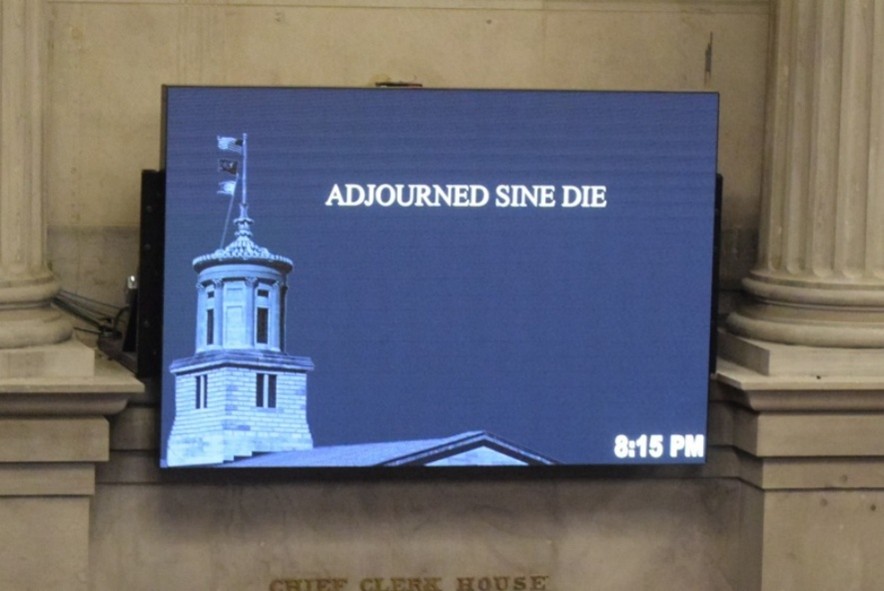
###